On this International Women’s Day, let’s celebrate the remarkable journey of Ms. Ritu Rastogi, a successful restaurateur who rose from humble beginnings. Her passion for food and unwavering dedication to serving her patrons have propelled her to great heights. Join us in honoring her story and her inspiring second innings in life, after raising her children and embracing the role of a homemaker. Let’s applaud the woman who serves as our beacon of inspiration, especially for young girls who may be apprehensive about motherhood. Go girls! The world is at your feet, and you have the potential for even greater success at any time and place.
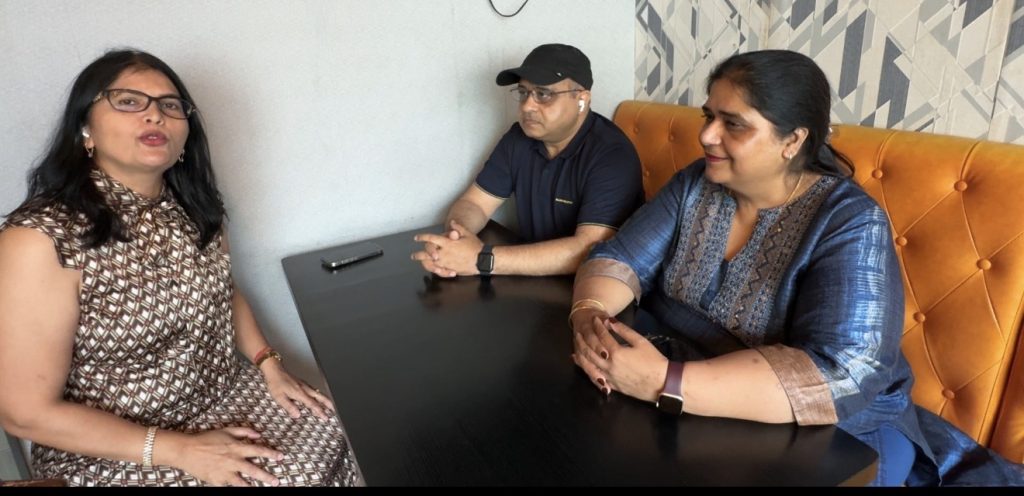
Interview with Ms Ritu Rastogi and Mr Rajeev Rastogi, owner of Dilliwale, an Indian Hong Kong
To change employers for an Indian helper (domestic worker) in Hong Kong, you must complete an online appointment process at the Hong Kong Immigration Department and then follow an additional process at the Indian Consulate.
Changing employers for an Indian domestic helper in Hong Kong necessitates approval from the Immigration Department. This approval is usually granted only after the completion of the contract or under exceptional circumstances such as abuse by the helper, a transfer of the employer, or the death of the employer. The helper must submit new contract documents, a release letter from the previous employer, and proof of the new employment. The cost for this process is HKD 172.
Here is the general procedure based on Indian Ministry of External Affairs guidelines:
1. Online Appointment & Registration at Indian Consulate in Hong Kong
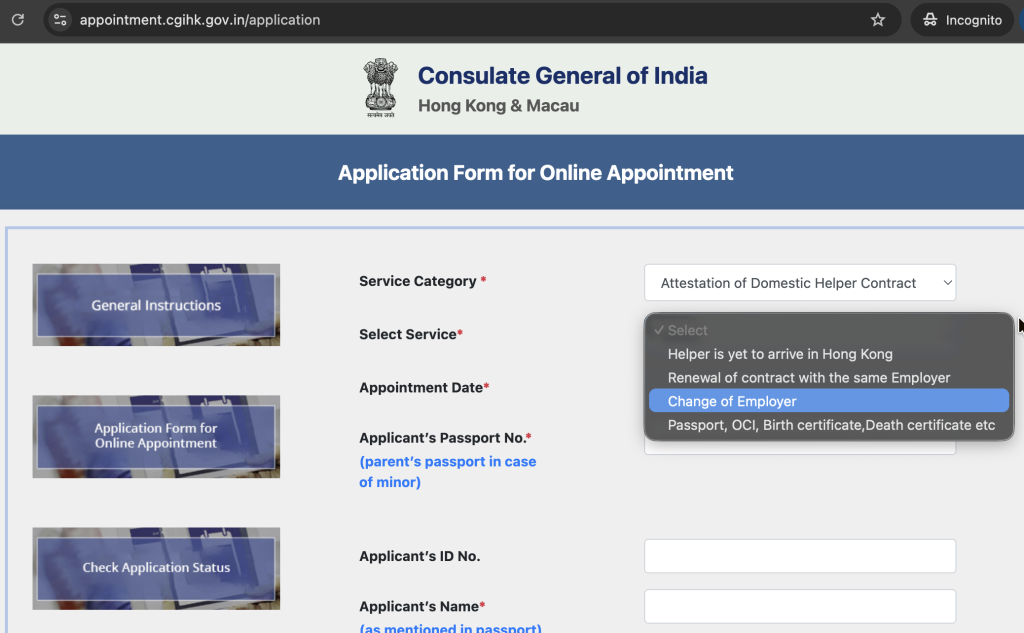
Visit Official Portal/Website for Booking Appointment: Visit the official Page at – Online Appointment Booking Book Appointment: Look for the “Service Category” on Application Form for Online Appointment page. You will likely need to register to book a slot. Select Category: Choose “Attestation of Domestic Helper Contract“ or specifically “Change of Employer” for change of employer. Mandatory Appointment: No person without a valid appointment letter will be allowed entry into the Consulate.
2. Required Documents for Change of Employer within 2 years contract
Change of employer within a contract period is not normally approved unless exceptional circumstances exist. Immigration Department
Outside HK Return: If changing employer within the two-year contract (not at the end), the helper is generally required to return to India and apply for a new visa, unless exceptional circumstances apply.
Processing Time: Applications are typically finalized within 10 working days upon receipt of all necessary documents.
Agency Fees: Employment agencies cannot charge more than 10% of the first-month’s wages as commission. Immigration Department +2
Contract Attestation: The new employment contract (ID 407) must be attested by the CGI.
Termination/Release Letter: The previous employer must provide a release letter or Form ID407E.
Required Documentation:
Duly filled Application Form (PDF – 217.63 KB, English) 2. Photocopy of employment contract with previous employer 3. Photocopy of form ID407 E or Release letter from previous employer 4. Duly filled new employment contract form (ID 407) in quadruplicate 5. Photocopy of the Hong Kong /Macau ID & passport of employer 6. Address proof of the employer 7. Photocopy of Indian Passport, Hong Kong/ Macau ID & current visa of Domestic Helper, Original to be shown 8. One latest and clear photograph of Domestic Helper 9. Fee of HKD 172
Application Submission: Submit within 4 weeks prior to contract expiry to the Foreign Domestic Helpers Section of the Hong Kong Immigration Department.
Modes of Submission: Online, by post, or in-person at the Indian Consulate in Admiralty.
To renew the contract, please download and fill up the form from here.
4. Important Regulations for Indian Helpers in Hong Kong
Two-Week Rule: Upon premature termination, a helper is typically permitted to remain in Hong Kong for only 2 weeks or the remainder of their stay, whichever is earlier.
Home Leave: Helpers are generally required to return to their place of origin before starting a new contract. However, they may apply for an extension of stay (usually not exceeding one year) to defer home leave with mutual agreement from the new employer. GovHK
Are you currently in the final weeks of a contract, or looking to terminate one early?
Disclaimer: Procedures, fee amounts, and document requirements are subject to change by the Ministry of External Affairs. Always check the latest notice on the specific consulate’s website.
Address of Indian Consulate General of India in Hong Kong Unit D, 16th Floor United Centre, 95 Queensway Admiralty, Hong Kong Nearest MTR Station: Admiralty – Exit D
Telephone: (852) 3970 9900 Fax: (852) 2866 4124
Immigration Headquarters (Main): 61 Po Yap Road, Tseung Kwan O, New Territories Registration of Persons (Hong Kong Office): 8/F, Immigration Tower, 7 Gloucester Road, Wan Chai Yuen Long Office: 1/F, Yuen Long Government Offices, 2 Kiu Lok Square, Yuen Long, New Territories General Enquiry Hotline: (852) 2824 6111
Providing you a step-by-step guide on how to accomplish this task
After French President Emmanuel Macron’s highly publicized visit to India, there’s a newfound interest in France. President Macron himself extended an invitation to Indian students to pursue education in France, as many French universities now offer courses in English, which was previously unknown to many of us. Following the US and UK, France presents a promising new frontier for Indian students seeking to study, work, or immigrate.
Let’s delve into the details of how one can plan to study, work, or immigrate to France.
Immigrating to France as an Indian citizen typically involves obtaining a long-stay visa (Visa de Long Séjour, or VLS) for stays exceeding 90 days, which can lead to a residence permit (titre de séjour). This may eventually pave the way to permanent residency (carte de résident) after meeting eligibility criteria, and potentially citizenship through naturalization. France does not have a direct “immigration visa” like some countries; instead, entry is based on specific purposes such as work, study, family reunification, or investment. Rules are governed by French immigration law, with applications processed through the French consulates or embassy in India via VFS Global centers. Processes can vary by category, and requirements include proof of financial stability, health insurance, accommodation, and no criminal record. Recent changes effective January 1, 2026, mandate civic exams and higher French language proficiency (e.g., A2 level for multi-year permits, B1 for resident cards) for long-term statuses. Always check for updates, as policies can evolve.Below are the main pathways for Indian citizens, with key rules and step-by-step processes. Start by using the visa wizard on france-visas.gouv.fr to confirm your category.
1. Employment-Based Immigration (Professional Purpose) to France
This is a common route for skilled Indians, especially in tech, engineering, or healthcare. Key visas include the “Talent Passport” for highly qualified professionals, “Salaried Employee” for those with job offers, or “Intra-Company Transfer” for multinational employees.
Key Rules:
Must have a job offer from a French employer or qualify as a skilled worker (e.g., salary threshold for Talent Passport: at least 1.5 times the minimum wage, around €2,800/month gross).
Employer may need to prove no suitable EU candidate (labor market test), except for Talent Passport.
Visa valid 4 months to 1 year initially; extends to multi-year residence permit (up to 4 years).
No quota system, but sectors like IT and biotech prioritize Indians.
Language: Basic French may help, but English is often sufficient for skilled roles; B1 level required for later residency renewals.
Step-by-Step Process:
Secure a Job Offer: Apply for jobs via platforms like LinkedIn, Pôle Emploi, or French company websites. Employer obtains work authorization from DIRECCTE (regional labor office) if needed.
Gather Documents: Valid passport, job contract, proof of qualifications (degrees, experience), financial proof (e.g., bank statements showing €1,200–€1,800/month), health insurance, accommodation proof, and police clearance certificate.
Apply for Long-Stay Visa: Create an account on france-visas.gouv.fr, fill the form, and schedule an appointment at a VFS Global center in India (e.g., Delhi, Mumbai). Submit 1 month before departure (no earlier than 6 months). Pay fee (~€99 for long-stay).
Biometrics and Submission: Attend in person for fingerprints and photo.
Arrival in France: Validate VLS-TS online within 3 months via OFII (pay stamp duty ~€200–€300). Apply for residence permit at local prefecture if extending beyond 1 year.
Path to Residency: After 1 year, renew for multi-year permit. After 5 continuous years, apply for 10-year resident card (requires stable income, integration, health insurance, and now civic exam).
2. Study-Based Immigration to France
France attracts many Indian students, with over 10,000 enrolling annually. This can lead to work and residency post-graduation.
Key Rules:
Must be accepted into a recognized French institution (university, grande école).
Visa valid for study duration (up to 1 year initially; renewable).
Financial proof: At least €615/month (bank statements or scholarship).
Post-study: Graduates can stay 1–2 years via “Job Seeker” authorization to find work, transitioning to employment visa.
Time as a student partially counts toward 5-year residency requirement (but not fully for EU long-term card).
Step-by-Step Process:
Get Admission: Apply via Campus France (etudes-en-france.net for Indians) or directly to institutions. Obtain acceptance letter.
Gather Documents: Passport, acceptance letter, financial proof, accommodation, health insurance, and academic records.
Apply for Student Visa (VLS-TS “Étudiant”): Via france-visas.gouv.fr and VFS; submit 1–3 months before departure.
Biometrics and Fees: As above.
Arrival and Validation: Validate via OFII; get student residence permit if staying over 1 year.
Post-Graduation: Apply for job seeker extension at prefecture; convert to work visa upon employment. After 5 years total (including study), pursue resident card.
3. Family Reunification in France
For joining family already in France (spouse, children, parents).Key Rules:
Sponsor must be French citizen/resident with stable income and housing.
Marriage to French national: Visa valid 1 year; renewable.
Children under 18 or dependent parents may qualify.
Must prove genuine relationship (e.g., marriage certificate).
After 3 years (or less for spouses), eligible for resident card.
Step-by-Step Process:
Sponsor Applies in France: Submits reunification request at prefecture with proof of relationship, income, and housing.
Apply for Visa: Via VFS after sponsor approval (takes 6–12 months).
Biometrics and Arrival: As above; validate VLS-TS.
Residency: Apply for “Vie Privée et Familiale” permit at prefecture. After 3–5 years, get resident card.
4. Investment or Business-Based Immigration to France
For entrepreneurs or investors.
Key Rules:
“Talent Passport – Business Investor”: Invest €300,000+ in a French business.
Or start a viable business with economic impact.
Visa up to 4 years; requires business plan.
Step-by-Step Process:Similar to employment: Secure investment/business plan, apply via VFS, validate on arrival, renew at prefecture. Leads to residency after 5 years.
Path to Permanent Residency (Carte de Résident)
After 5 continuous years on eligible permits (e.g., work, family; partial for study), apply at prefecture.
Requirements: Stable income (€21,621+ annually), health insurance, B1 French, civic exam, republican integration.
Valid 10 years; renewable.
Exceptions: Shorter for family of French nationals (3 years) or certain nationalities under bilateral agreements (but not India).
Path to French Citizenship
After 5 years of residency (reduced to 2 for graduates of French higher education), apply via naturalization.
Requirements: B2 French, civic knowledge, integration, no criminal record.
After Germany, Spain is another European country that is attracting non-EU citizens to work from their country.
Have you ever dreamed of answering work emails while sipping sangria on a sunny Spanish beach? Well, Spain’s new digital nomad visa makes that dream a reality! This visa is designed for non-EU citizens who want to live and work remotely from Spain for up to a year, and maybe even longer
But there’s a catch: you’ll need to make sure at least 80% of your income comes from outside Spain.
This visa is part of Spain’s Start-Up Act, a government initiative that aims to attract international talent and remote professionals. Whether you’re a developer, writer, marketer, or freelance consultant, this scheme offers a much cheaper and easier way to enter Europe compared to traditional work permits.
Who can apply?
Applying for Spain’s digital nomad visa is pretty straightforward:
– You have to be a non-EU citizen.
– You’ll need to work remotely either as an employee for a non-Spanish company or as a self-employed professional with mostly international clients.
– At least 80% of your income should come from non-Spanish sources.
– You’ll need to show at least three months of professional engagement with your clients or employer.
– The employer or freelance business must have been operational for at least a year.
What makes this visa so great?
Spain’s offering is not only affordable but also super flexible. At just €75, it’s one of the most affordable digital nomad visas available in Europe. Approved applicants can stay for up to 12 months, and they can renew their visa if they want. Plus, they can bring close family members, as long as they meet the income threshold to support their dependents.
Applicants can choose from a variety of Spanish cities, from bustling hubs like Barcelona and Madrid to charming coastal towns, each with great internet, food, culture, and weather.
How to apply?
You can apply from your home country or even while in Spain on a tourist visa. The documents you’ll need to bring include:
Hey, have you heard about Spain’s new remote work visa? It’s a game-changer for freelancers and digital nomads looking for a more affordable lifestyle. It’s super easy to get compared to other work visas, and you don’t need a fancy business plan or a million documents. Just show proof that you’ve been running your business for at least a year, have a clean criminal record, and can prove that you’re making at least 80% of your income from outside Spain. Plus, you can live in Spain and explore the rest of the Schengen zone. It’s a great option for anyone looking for a better life, and it’s definitely one of Europe’s most attractive visas in 2025.
Japan’s New Residency Qualification System for Foreign Talent
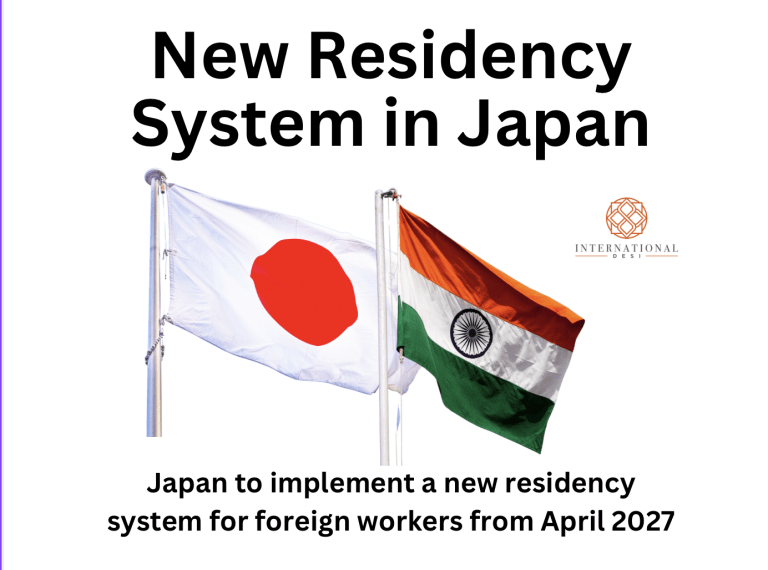
In response to the growing global competition for skilled talent, the Japanese government plans to implement a comprehensive policy that will introduce a new residency qualification system for foreign workers by April 2027. This initiative is designed to attract and retain foreign expertise within Japan’s workforce.
Key Changes to Current Systems
Abolition of the Current Technical Intern Training System: The existing technical intern training system will be phased out in favor of a new approach.
Introduction of the Employment for Skill Development System: This new framework will cover the same industry sectors as the specified skills system, which targets highly skilled workers and was launched in 2019.
The primary objective of this reform is to systematically nurture foreign human resources and ensure their long-term integration into Japanese workplaces. The government plans to promote a related ministerial ordinance before the summer concludes, responding to the escalating global talent competition.
Background on the Technical Intern Training Program
Initially launched in 1993, the technical intern training program aimed to aid international development by providing trainees from developing countries with skills and knowledge while they worked in Japan. However, the system has faced criticism for exploitation by companies seeking inexpensive labor, leading to human rights violations such as unpaid wages and excessive hours.
Meanwhile, neighboring economies like South Korea and Taiwan have expanded their acceptance of foreign workers, intensifying the competition for talent. Japan’s allure for foreign nationals has diminished, particularly since its nominal per capita GDP was surpassed by South Korea in 2022. Consequently, Japan urgently needs significant reforms to draw competent foreign human resources.
Features of the New Employment for Skill Development System
Training for Unskilled Laborers: Foreign nationals entering as unskilled workers will undergo a three-year training program to qualify for the specified skill Type 1 residency status, allowing them to work in Japan for up to five years.
Job Mobility: Foreign workers will have the opportunity to change employers under specific conditions, including job transfers within the same industry, thus fostering a more favorable working environment. In contrast, the previous technical intern training system restricted workplace changes, often leading trainees to leave due to unsatisfactory conditions.
To manage excessive labor competition, the new system will impose industry-specific restrictions on job transfers for one to two years. Trainees must meet certain skill assessments and Japanese language proficiency tests to qualify for job changes. Companies accepting these trainees will be limited to reputable firms that adhere to established standards.
Focus on Rural Labor Shortages
The new system will specifically target acute labor shortages in rural areas. The maximum number of foreign workers allowed for training and employment will depend on a company’s full-time employee count. However, selected companies in rural regions will be permitted to accept up to three times the standard limit for foreign trainees.
Additionally, stricter regulations regarding job transfers to urban areas will be implemented to prevent the over-concentration of talent in cities with higher wages. This initiative aims to minimize workforce migration from rural regions and promote a balanced distribution of talent across various areas.
Limits on Trainee Transfers
At host companies, the proportion of trainees who have switched employers must not exceed one-third of the total foreign trainees. For urban companies, this limit will be even stricter, allowing transferred trainees to constitute no more than one-sixth of the total foreign workforce.
Transitioning from Technical Intern Training to Employment for Skill Development
The existing technical intern training system will gradually be replaced by the “Employment for Skill Development” system. This new framework will standardize training requirements across various industries, aligning them with the highly skilled worker skills system introduced in 2019.
The primary goal of this reform is to systematically nurture foreign human resources and facilitate their long-term integration into Japanese workplaces. The government plans to issue a related ministerial ordinance by the end of summer to support the implementation of these reforms.
Addressing Concerns with the Previous System
Established in 1993, the technical intern training program was initially aimed at fostering international cooperation by accepting trainees from developing nations. However, it has faced backlash for potentially serving as a means to obtain low-cost labor, raising concerns about human rights violations, including unpaid wages and long working hours.
In contrast, neighboring economies like South Korea and Taiwan have significantly increased their acceptance of foreign workers, heightening global competition for skilled talent. Consequently, Japan’s economic attractiveness to foreign nationals has declined, especially as its per capita GDP was overtaken by South Korea in 2022.
Urgent Need for System Reform
Recognizing the pressing nature of these challenges, the Japanese government has acknowledged the need for substantial reforms to position Japan as a more appealing destination for skilled foreign human resources. The forthcoming Employment for Skill Development system will allow foreign nationals entering as unskilled laborers to undergo a three-year training program to elevate their skills to meet Type 1 residency status, permitting them to work in Japan for up to five years.
Enhancing Mobility and Working Conditions
A significant feature of this new system is that it will allow foreign workers to change employers under certain conditions, such as job transfers within the same industry sector, thereby improving their working conditions. Under the previous technical intern training system, trainees were generally not permitted to switch workplaces, which contributed to a decline in their ability to tolerate unsatisfactory working conditions.
To mitigate intense competition for labor among companies, the new system will introduce industry-specific periods of one to two years during which job transfers will be restricted. To qualify for these transfers, trainees must meet specific criteria related to skill assessments and Japanese language proficiency. Participating companies will be limited to reputable firms that adhere to established standards.
Moving Forward with Policy Formulation
Following the establishment of this foundational policy, the government has begun drafting detailed operational guidelines that will define specific regulations for sectors employing foreign trainees. The government anticipates adopting these policies by the end of the year after consultations with an expert panel, thereby finalizing the new Employment for Skill Development system.
When one door closes, another opens. If your American dream turns sour, don’t lose hope; there are other opportunities on the horizon.
If you’re an Indian citizen or non-EU resident looking for an exciting international career, Germany might be the perfect place for you. They’ve got a special visa called the Freelance Visa that lets you live and work independently like a pro. This self-sponsored visa is designed for Indian professionals earning a minimum of INR 1.3 lakhs per month. It’s a “D Type” visa for long-term stays, valid for three years with multiple entries in Germany.
This visa is open to all sorts of self-employed folks, like artists, writers, engineers, and consultants. If you’re ready to take the plunge, here’s what you need to know:
– Proof of Income: You’ll need to show that you’re making enough money to support yourself. Usually, that means a monthly income of at least €1,280 (which is about ₹1.27 lakh).
– Education and Qualifications: You’ll need a university degree or other relevant qualifications.
– Financial Stability: Make sure you’ve got enough money saved up to cover your expenses.
– Health Insurance: You’ll need to have health insurance coverage.
– Work Plan: You’ll need to have a detailed plan for your work.
– Business Contacts: You’ll need to have contacts in Germany or Europe.
– Passport-Sized Photos: Don’t forget to bring passport-sized photos!
– Age Requirement: If you’re over 45, you’ll need to provide details about your retirement savings or pension.
Now, let’s talk about how to apply for the Freelance Visa:
– Start in Your Home Country: Begin the application process in your home country with a National D Visa.
– Cost of Visa: Euro 75
– Fill Out the Form and Gather Documents: Once you’ve filled out the form and gathered all the necessary documents, schedule an appointment with the German embassy or consulate.
– Wait for Approval: If you’re approved, you’ll receive a visa that’s valid for 3 to 6 months.
– Arrive in Germany: Once you’re in Germany, register your address within two weeks and apply for a freelance residence permit at the local immigration office.
The Freelance Visa is usually granted for 1 to 3 years and can be renewed. After five years of continuous residence, meeting the financial requirements, and passing a language test, you might be eligible for permanent residency.
Freelancers in Germany also need to register with the local tax office and get a tax number. This visa is a great opportunity for Indian creatives and professionals to explore life and work in one of Europe’s most vibrant and welcoming countries. So, what are you waiting for? Apply now and start your new adventure!
Stepping into Nikil Inaya’s today | stay: Passages from Hong Kong is to enter a space where time and belonging are suspended—where each canvas is not just a surface, but an intersection of memory, migration, and the tactile residue of lived experience. Out of all the works on display, one has lingered with me the most, Tears Go By, for its audacity and evocative power.
Tears Go By: Meteors, Memory, and Material
At first glance, Tears Go By is a piece restless with meteors, each trailing a streak of rainbow across a blackened cosmos. The texture is profound—oil paint layered and stacked so thickly that the meteors themselves emerge in relief. Photographically, these surfaces are a pleasure and a puzzle: macro shots reveal the almost geological build-up of pigment, where color is not just seen but felt.
In the upper right, Uranus looms, half-brushed in color and half-bleached white, as if caught between presence and absence. The painting features a meteor; although not centered, it displays a classic flame-shaped trail, drawing the eye, a singular event amid a shower of passing lines. The rest are mere marks; however, each line has a brief yet beautiful existence. The painting feels cosmic in size, yet intimate. It suggests that even in a night of hundreds of falling stars, there is always one moment, one memory, that stands apart.
The sense of depth in this piece is what moved me the most, not just in the paint, but in the metaphor. What is shown isn’t simply a spectacle on a celestial scale; it’s a representation of fleetingness and endurance. The rainbow trails against pure black evoke joy and loss, the vibrancy of living against the void. Moving from place to place, never truly setting up a flag at one place, I picked up many things across the places I’ve lived, and the choice of Uranus being titled, distant, and only half-revealed, echoes my own experience of being half-rooted here, half elsewhere.
Nikil Inaya: Roots, Reflections, and the Many Stages
If the paintings are passages, then Nikil himself is the traveler—always in motion, but always carrying home within him. As I entered the exhibition, I was struck by the presence of his parents, especially his mother, a scene that mirrored my own experiences. His father, jokingly self-proclaimed “studio assistant” lightened the mood, while his mother translated titles and meanings for the extended family, shifting seamlessly between languages. I also couldn’t help but smile at the way Nikil would carefully explain the meaning or title of a piece to his mother, only to hear her simplify—or sometimes skip over—those details entirely when sharing with the rest of the family. Nikil’s ability to move between English and his mother tongue was more than just communication; it reminded me of my moments of switching languages—sometimes searching for the right phrase in English when my mother tongue falls short. An example of how our roots adapt and persist, carried and reinterpreted in every new context.
This duality of belonging and becoming is imbued in his work and his presence. The exhibition is dedicated to his late grandmother, and the sense of lineage is palpable, even as the subjects traverse myth, memory, and modernity. There’s a humility in how he shares authorship of the experience. Rather than insisting on his explanations, he welcomed his parents into storytelling, letting them translate, simplify, and even reinterpret his work when talking to his extended family. A reminder that sharing your story means letting others help tell it, too.
Diversity of Sources
What inspires me most about Nikil Inaya is not just his work, but how he refuses to be defined by a single pursuit. His website is a manifesto for creative plurality, encompassing acting, painting, directing, writing, music, dance, and more. It’s a reminder that you don’t have to pick just one path. You can be many things, and those many things can feed each other—an especially powerful reminder for someone like me, standing on the cusp of college and future choices.
As someone who has also wandered between voice acting, directing, writing, martial arts, and more, I’ve often felt pressured to choose a lane, to specialize or narrow my focus. But seeing Nikil’s success and his ability to fill an exhibition hall with the evidence of a life lived in many directions, it permits me to embrace the full spectrum of my interests. To create, to perform, to direct, to imagine: all of it matters, and all of it can coexist.
The Lasting Afterglow
Today | stay is more than an exhibition; it’s a declaration that identity is not fixed, instead it is a constellation. Sometimes scattered, sometimes gathered, always luminous against the dark. Tears Go By captures that perfectly: a sky full of fleeting brightness, anchored by one unforgettable streak. Nikil Inaya’s journey, his roots, and his multiplicity remind me that we are all, in some sense, meteors—passing through, leaving color, carrying our origins with us into every new night.
Written and photographed by Ankul Sidana Hong Kong Visual Arts Centre, July 2025
Examining the Recent Controversy in India Surrounding Samosa and Jalebi
Indian snacks are often healthier than their Western counterparts and junk food. This is primarily due to their ingredients, which typically include chickpea flour and ghee, both of which provide beneficial fats. In contrast, Western junk food commonly contains refined flour, palm oil or trans fats, along with high levels of sugar or corn syrup.
Moreover, many Indian snacks incorporate a variety of spices such as turmeric, cumin, and coriander, which not only add flavor but also offer numerous health benefits. These spices are known for their anti-inflammatory and antioxidant properties, contributing to overall well-being.
Traditional Indian snacks often include ingredients like nuts, seeds, and lentils, which are rich in protein and fiber. This combination helps in maintaining energy levels and promoting satiety, reducing the likelihood of overeating. It means it doesn’t give high glucose spike to due protein and fats in Indian sweets. On the other hand, western junk food tends to be heavily processed, lacking essential nutrients, and often leads to quick spikes in blood sugar levels.
Additionally, Indian snacks are generally prepared using traditional cooking methods, such as roasting, steaming, or air frying, which preserve the nutritional value of the ingredients. This contrasts with deep-fried western snacks that absorb unhealthy oils, leading to higher calorie counts and increased risk of health issues.
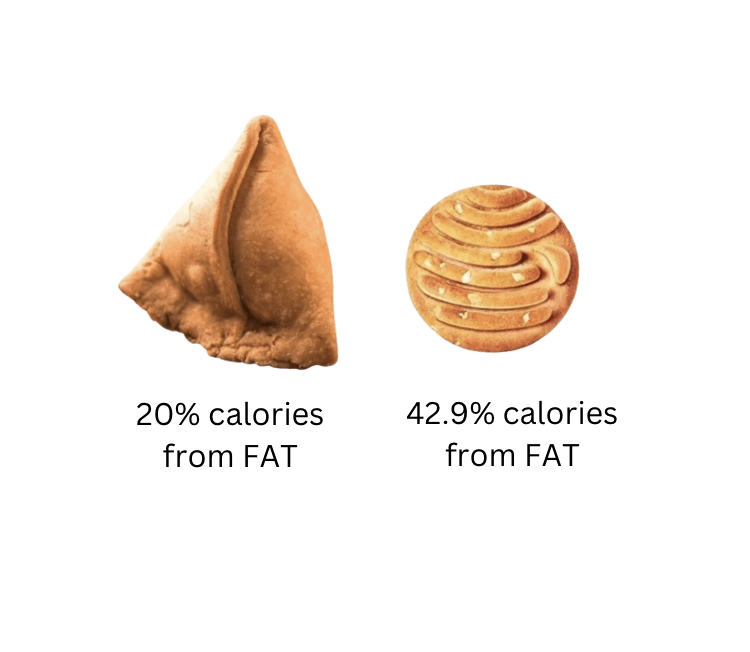
Check out the data below to compare and make your own choices.
(Disclaimer: The data above is compiled from various websites on the internet. These are approximate values, and they may change depending on the size, weight, or ingredients of the item.)
Eating samosas will have fewer calories than biscuits loaded with trans fat and refined flour.
In essence, the emphasis on whole, natural ingredients and mindful preparation makes Indian snacks a healthier choice, offering both taste and nutrition without compromising on flavor.
Many property owners believe that registering the property on their name after a sale is sufficient proof of ownership. However, the recent Supreme Court ruling in India has shaken the real estate market. The ruling states that a sale deed does not guarantee the ownership of the property. Besides property registration documents, several other documents can serve as evidence of ownership. These include the sale deed, title deed, encumbrance certificate, property tax receipts, and Khata certificate. Additionally, the possession letter, occupancy certificate, and building plan approval can also be relevant.
Here’s a breakdown of these documents:
Sale Deed:This is the primary document that transfers ownership from the seller to the buyer during a property transaction. This document is signed by both buyers and sellers with witness from both parties.
Title Deed:This document establishes legal ownership of the property.
Encumbrance Certificate (EC):Issued by the sub-registrar’s office, the EC confirms if there are any existing loans, mortgages, or legal disputes associated with the property.
Property Tax Receipts:These receipts show that property taxes have been paid, indicating the owner’s responsibility and connection to the property.
Khata Certificate/Extract:Issued by the local municipal authority, this certificate identifies the property, its owner, and the type of land use (residential, commercial, etc.).
Possession Letter:Issued by the builder or seller, this letter indicates the date when the buyer can take possession of the property.
Occupancy Certificate (OC):This certificate, issued by local authorities, confirms that the building is ready for occupancy and complies with approved plans.
Building Plan Approval:This document, issued by relevant authorities, shows that the building plan has been approved, ensuring it meets construction standards.
Other Documents:Depending on the specific situation, other documents like the allotment letter (if applicable), No Objection Certificates (NOCs) from relevant authorities, and utility bills may also be relevant.
Society share certificate: If you bought an apartment, you will have to submit one set of documents with the society office and share certificate.
Society Membership: Fill up the membership form and obtain your membership and other process as necessary by the society office.
While registration is essential for legal validity, these additional documents serve as further evidence of ownership and can be beneficial in various situations, including property disputes and loan applications.
International Desi recommends, even if you have the cash to cover the property’s cost, it’s advisable to seek a small loan from a reputable bank. This is because the bank will thoroughly review the property’s documents and formalities to ensure the property’s title and documents are in order before approving the loan. By outsourcing this legal process to experts, you can obtain legal advice without incurring additional costs and minimize the risk associated with the property’s title.
Additionally, ensure that all property-related documents are kept in a secure location. Certified copies of documents issued by the registrar should also be stored in another location to prevent their destruction in case of fires, floods, or theft.
Internațional Deși presents Hong Kong Guide 2025-26. This is useful guide for the Indians living in Hong Kong and traveling to Hong Kong. Since it is big file, it will take 1-2 minutes to download. Please wait for a while till the entire file is downloaded. Your feedback is much appreciated.



 (PDF – 217.63 KB, English)