الرئيسية بلوق الصفحة 4

Highlights of India’s Budget 2024

0

Here are the highlights of Part B of of Honorable Finance Minister’s speech of Budget 2024

I. Direct Tax:

A. General


1.  Rationalise and simplify direct taxes appreciated by taxpayers
2. 66% using simplified new tax regime
3. Comprehensive review of Income Tax Act to reduce disputes in Income Tax
4. Simplification for charities and TDS-
5. TDS- 5% reduced to 2%
6. TDS rates on ECO reduced from 1% to 0.1%
7. Decriminalise tds paid upto due date of filing tax statements
8. Rationalising and simplifying tds defaults
9. Simplification of re-opening or reassessment – if income escaped> 50 lakhs , 5 years limit instead of 3
10. Search procedure simplified
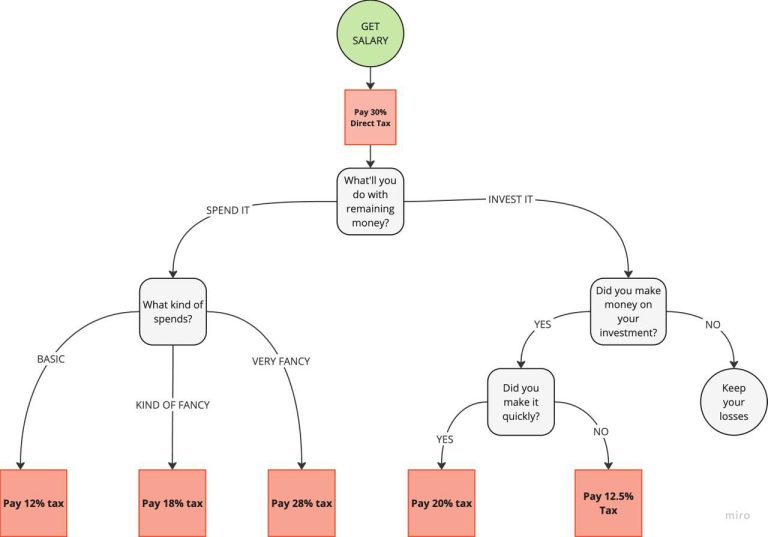
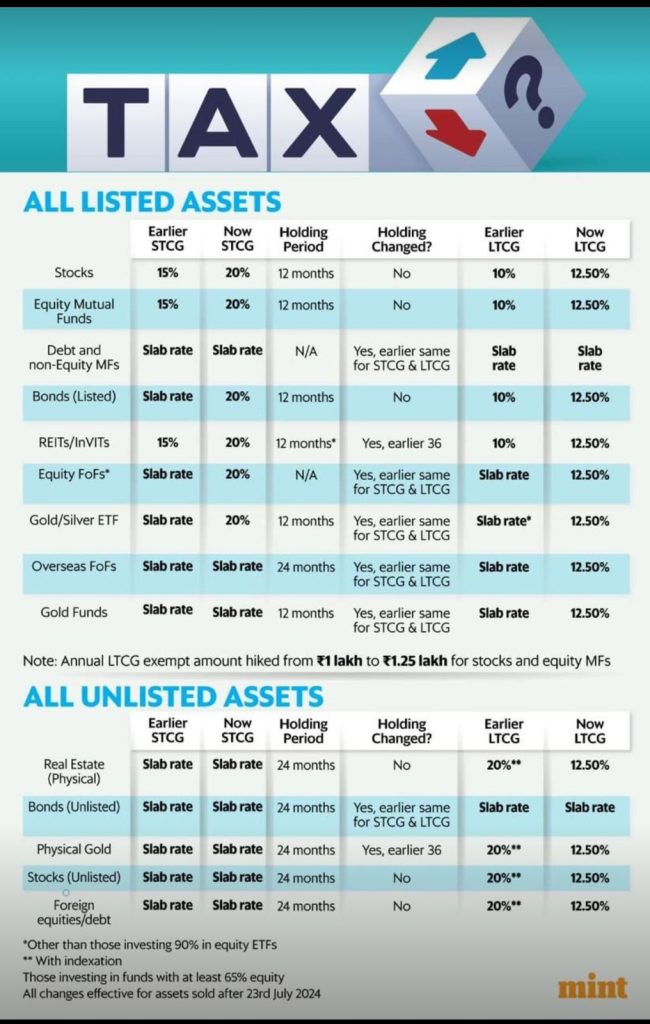
11. Capital gains – short term capital gains shall attract 20% and other STCG same rate
12. LTCG -12.5% instead for Financial assets
13. Limit of exemption of Capital Gains is 1.25 Lakhs
14. Safe Harbour Rules and TP assessment simplified
15. Angel tax withdrawn
16. Simpler tax regime for foreign shipping company promoting domestic tourism
17. Safe harbour rates for foreign mining company to sell diamonds in India
18. Foreign company tax rates from 40 to 35%
19. Security transaction tax on F&O increased to 0.2 and 0.1%
20. Buyback of shares taxed on recipients
21. NPS employer contribution and employees contribution increased from 10 to 14%
22. Non reporting of foreign assets upto 20L depenalised
23. Equalisation levy withdrawn
24. Immunity from penalty and punishment for benamidar

B.Personal Income Tax


1. Standard deduction increased from 50K to 75K
2. Family pension limit 15K to 25K
3. New tax regime structure
0-3 L nil 3 Lakhs-7 Lakhs -5% 7 Lakhs-10 Lakhs 10% 10 Lakhs -12 Lakhs 15% , 12 Lakhs -15Lakhs -20% and Above 15Lakhs- 30%
II.GST

1. Rationalised tax structure and expand to remaining sectors

III Customs Duty


1. Customs duty to promote local manufacturing, indigeniousation and reduction in rates of imports to rationalise and simplify taxes for ease of doing business
2. Medicine and medical equipments to provide relief for cancer equipments- exempt customs duty
3. X ray tubes and flat panel detectors – Reduced rates
4. Mobile phone- decrease in customs duty
5. Critical 25 minerals such as copper, lithium, cobalt, etc to exempt customs duty or reduced Basic customs duty duty
6. Solar energy – list of exempt capital goods for solar has reduced
7. Marine- reduction of customs duty for shrimp and fish feed
8. Leather and textile sector -reduction in customs duty
9. Precious metals- reduction of customs duty for gold, silver and platinum for the same
10.  Electronics – reduction of BCD for nonoxidised copper
11. Plastics- PVC flex bands rate are increased
12. Telecommunication equipments- increased customs duty
13. Trade faciliation- promote domestic aviation and ships maintenance and operations – propose to extend period for export for repairs from 6 months to 1 year.  Reimport of goods from 3- 5 years

*IV. General*


1. All taxpayer services are digitalised
2. Faster disposal of appeals in first appeals
3. New vivaad se viswas schemes
4. Limit increased for filing appeals

What is cheaper and what is costlier in 2024 budget?
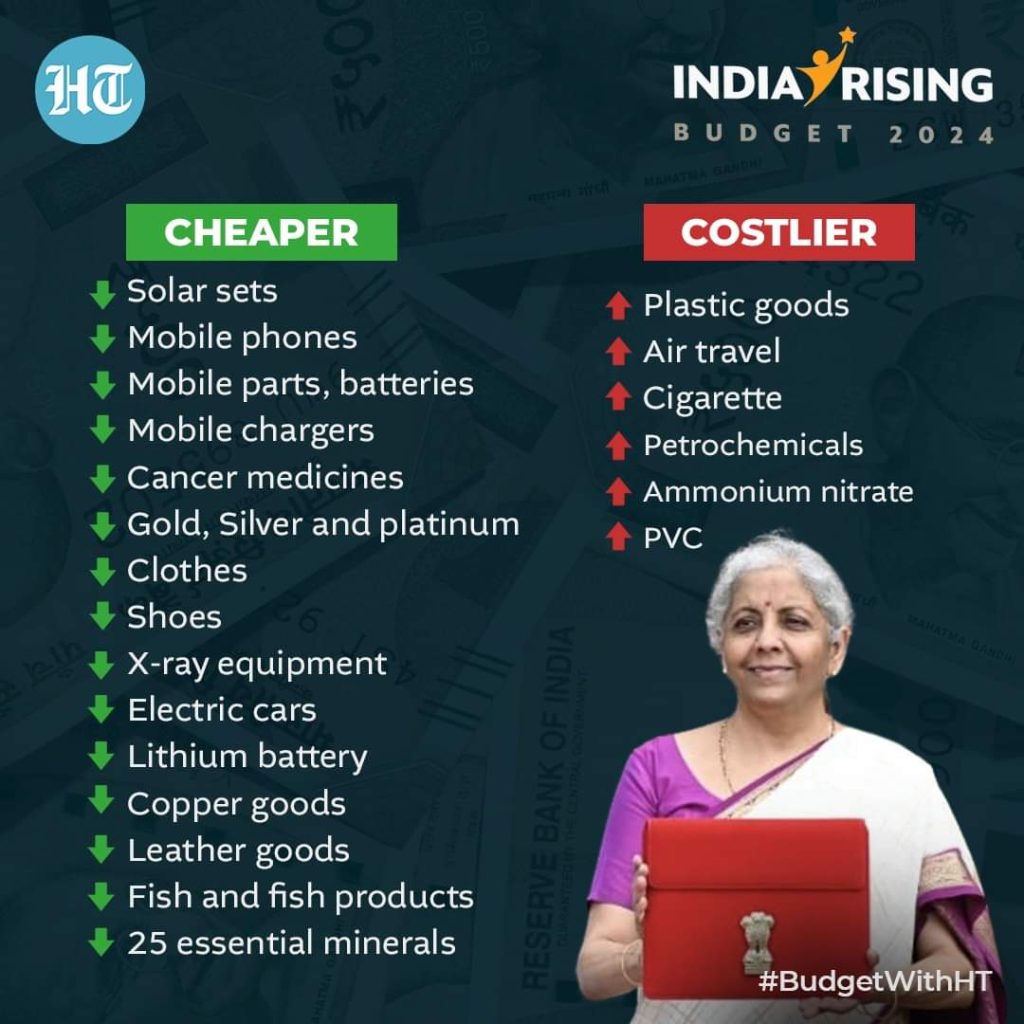
You can view the details budget highlights in this pdf document at this link.

Indian Election 2024 Result Analysis

0

The 2024 Indian general election, which concluded on June 1, yielded significant outcomes and trends that are currently being analyzed.

Here are some key points from early analyses of the election results:

  1. BJP’s Performance: The Bharatiya Janata Party (BJP) remains a dominant force, although its vote share has seen a slight reduction compared to the 2019 elections. Analysts like Rajdeep Sardesai suggest that despite local challenges and issues like rising prices in states such as Maharashtra and Rajasthan, Prime Minister Narendra Modi is likely to secure a third consecutive term​ (Wikipedia)​​ (India Today)​.
  2. Opposition’s Role: The opposition, particularly the Congress-led INDIA bloc, has fought harder than expected. They have capitalized on local issues and fielded strong candidates, making the elections more competitive in several regions​ (India Today)​.
  3. Regional Dynamics: In states like Karnataka, the BJP’s stronghold appears to have weakened slightly, with internal surveys indicating a reduction in seats won. Conversely, the party is making inroads in Telangana and Andhra Pradesh through strategic alliances​ (India Today)​.
  4. Voter Turnout and Participation: The election saw a record turnout, with 642 million voters participating, including the highest ever participation by women. This indicates robust engagement from the electorate, reflecting a keen interest in the democratic process​ (Wikipedia)​.
  5. Election Issues:
  6. The election was marked by diverse regional issues. While national narratives like the Ram Mandir did not resonate as strongly, local concerns such as inflation and candidate selection played pivotal roles. Additionally, there were criticisms regarding the handling of hate speeches and the functioning of Electronic Voting Machines (EVMs)​ (Wikipedia)​​ (Hindustan Times)​.

Impact on Stock Market:

The stock market reacted strongly as Sensex plunged 4,390 pts, Nifty below 22,000 as a landslide eluded NDA. It eroded post exit poll peak and fell strongly. However, investors need not worry about initial shocks as the central government will not change nor will policies. Development work is expected to continue as planned.

Overall, the BJP retains its central position in Indian politics, though in a nuanced landscape influenced by regional variations and a more assertive opposition. The detailed results and their implications will continue to unfold as complete data becomes available.

Visa Bulletin Lists Priority Dates For The Green Card Application Line

0

US Visa Bulletin for June 2024:

The bulletin serves as a guide for the Green Card journey.

The June 2024 US Visa Bulletin provides critical dates for Indians applying for Green Cards, with progress seen in both family-sponsored and employment-based categories. This helps applicants understand when they can submit their applications and the expected wait times​ (Finance India News)​.

As per the June 2024 Visa Bulletin, the US Citizenship and Immigration Services (USCIS) informed that there are no changes in final action dates or dates for filing for all countries of chargeability* in the EB-1, EB-2, EB-3, and EB-5 categories. For the EB-1, China at September 1, 2022 and India at March 1, 2021.

The Visa Bulletin lists priority dates, essentially placeholders in the green card application line. Each month, the US Department of State calculates how many applications are waiting in each category, helping them estimate when different applicants might be able to move forward.

PHOTO: Economic Times

Two Ways to Move Forward

1. Filing for Adjustment of Status: If you’re already living in the US

2. Applying for an Immigrant Visa: If you’re living outside the US

Dates for Filing

This section specifies the earliest date applicants can submit their adjustment of status or immigrant visa applications. It helps applicants determine when they can proceed with their filing based on their visa category and country of origin.

Final Action Dates

These dates estimate the wait time for application approval, leading to permanent residency. They function as a queue based on visa category and nationality, indicating when applicants can expect their applications to be processed.

*(a United States immigration concept – it is the country determined to be the applicant’s origin)

NEET UG NRI Quota for Medical College Admission

0

Eligibility and Procedures for NRI Quota

  1. There is a good news for NRI students who are keen in pursuing medical education in India can apply through the NRI quota in the NEET UG exam. This is apart from the 15% ALL India Quota (AIQ) and 85% State Quota, universities in India offer admission to NRI students under the 15% NRI quota in the NEET reserved by the Medical Council of India. Both Persons of Indian Origin (POI) and Overseas Citizens of India (OCI) are included in the NRI Quota.

Eligibility Criteria

Candidates must meet certain criteria. This includes the residency requirements, academic qualifications, and successful completion of the NEET exam. The NEET 2024 application process began in February, and the exam was conducted on May 5, 2024. The results are expected in the second week of June, followed by the admission process in July/August 2024.

NRI quota in MBBS is the reserved seats for Non Resident Indian students in medical colleges. There are several government and private medical collages. Only government medical colleges of some states like Rajasthan, Haryana, Chandigarh, Goa , Himachal Pradesh, Punjab and Pondicherry have NRI quota. Both the citizens of India having Indian origin and the Overseas Citizens of India (OCI) are included in this NRI quota. NRI quota seats are available only in private medical colleges of Andhra Pradesh and Telangana. There are close to 600 NRI MBBS seats in Andhra Pradesh and Telangana. Candidates NEET to qualify NEET-UG for admission under NRI quota.

These updates highlight important opportunities and requirements for NRIs in both political participation and education. For more detailed information, you can visit the official Election Commission of India website and educational portals like.

Photo: PTI

How to apply for NRI quota in NEET?

During the NEET-UG counseling, candidates can apply under NRI quota for MBBS admission in government medical colleges and deemed universities. NRI quota seats in private medical colleges are offered at state level only.

The process for an NRI student to get admission in a medical college under NRI quota.

  • – Apply for NEET-UG exam at NTA NEET website.
  • – Clear NEET exam.
  • – Register and attend the state counseling where you want to take admission in a government/ private medical college under NRI quota.
  • – Each state has a separate counseling process for admission in NRI quota.

Toyota Shifts Gears to Biofuel

Toyota to launch new lean compact engines to support natural fuels

Toyota unveiled its plans for a futuristic take on the internal combustion engine.

“An engine reborn.” That’s how Japanese automaker Toyota introduced plans to put a futuristic spin on the traditional internal combustion engine.

It also announced it would offer lean compact engines that run on natural fuels like hydrogen and bioethanol, or will be paired with zero-emission electric motors in hybrid vehicles. During a 3-hour presentation Tuesday in Tokyo, the car manufacturer giant announced it would offer green fuel-powered compact engines.

It coincides with a push for 100% electric vehicles by many auto industry competitors.

In an interview with Bloomberg, Toyota CEO Koji Sato said the vehicle’s engine has been optimized for the era of electrification, with the goal of achieving “carbon neutrality” for the planet.

There is already a hybrid car built by Toyota – the Prius – with an engine powered by a gas engine and an electric motor. A cleaner drive is delivered by switching between the two. Prius uses the bZ4X electric compact crossover, packed with what’s called the e-TNGA platform. That stands for “Toyota New Global Architecture,” also used in its Prius and Lexus models.

Electric motors will become the main driving force in future hybrids. Apparently, Toyota is planning to have the new engine take on a lesser role and assist it along the way.

As part of Toyota’s commitment to meeting upcoming stringent emissions standards, Subaru Corp. and Mazda Motor Corp. also joined a workshop billed as a “multi-pathway workshop.”

“Each company wants to win, but we can be faster if we work together,” said Sato.

But executives didn’t disclose the details of when the biofuel engines hit to market.

Tetsuro Fujinuki, Chief Technology Officer at Toyota, said the company is working on a “Subaru-like” electric vehicle but not ditching its traditional engine.

The Toyota Motor Company is focusing on developing stylish BEVs.

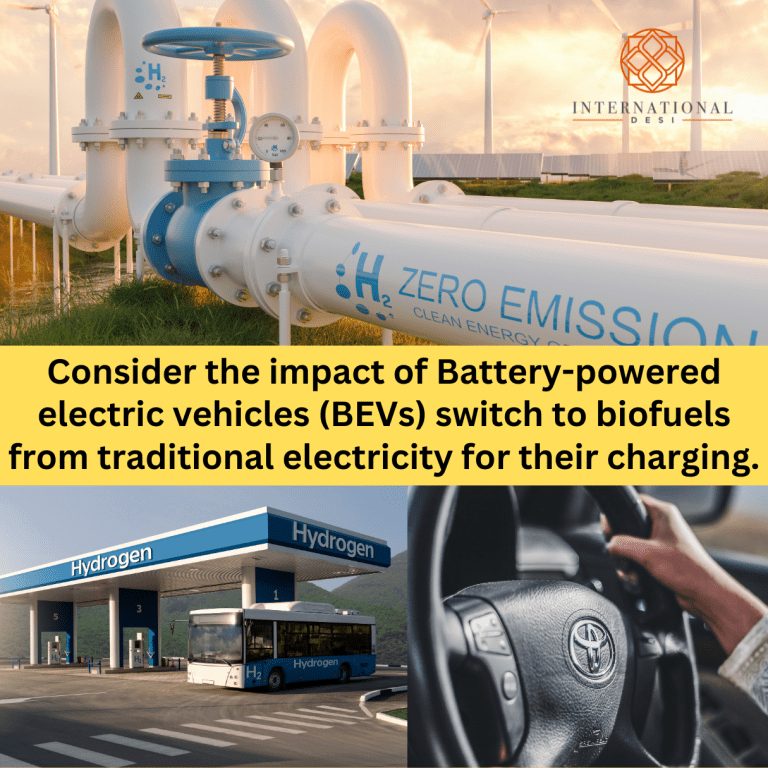
The BEV production is complicated as the company representatives explained on Tuesday that energy supply conditions differed globally. Considering that, the future products must focus on meeting the needs of a variety of customers. Furthermore, there is also enormous investments required for mass-productions of batterypowered electric vehicle (BEVS).

If BEVs are powered by biofuels, auto industry can make significant positive impact on emission and global warming problems.

Impact of Modi’s Third Term on Indian Stock Market

0

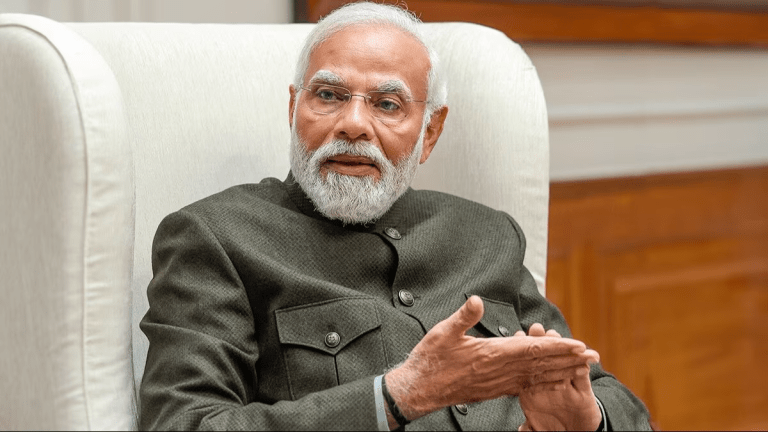
In the Indian subcontinent, the election of Narendra Modi as the Prime Minister of India for the third time has created a great deal of excitement and speculation about the future of the country. With his second consecutive term, Modi has not only cemented his position as a leader but also gained a strong mandate from the people of India. This election victory has resulted in high expectations and speculations regarding the impact Modi’s third term will have on the Indian stock market.

Impact of Modi’s Third Term on Indian Stock Market

The Modi government’s economic policies during its previous terms have had a significant impact on the stock market. The market responded positively to the implementation of reforms such as the Insolvency and Bankruptcy Code (IBC), which aimed to streamline the process of corporate insolvency. Additionally, the initiatives such as the Make in India campaign and the Swachh Bharat Abhiyan (Clean India Mission) had a positive impact on the sentiment and investor confidence.

“You will see that within one week after June 4, the day election results are to be declared, market participants will get tired,” PM Modi said in an interview to NDTV while hinting that the market will hit fresh record highs.

With Modi Ji’s victory in this election, there are expectations that his government will continue to pursue similar economic policies during its third tenure. These include further liberalization of FDI policies, promotion of domestic manufacturing, and improvement of infrastructure. These measures are likely to boost investor sentiment and stimulate economic growth.

However, there are also some concerns and risks associated with a Modi-led government for the stock market. One concern is the possibility of rising inflation, given the large government spending and populist policies of the past. Additionally, any changes in foreign policy or international relations could have implications on the stock market as well.

A leader’s personality also determines the stock market’s price trend. When the leader is powerful and well-liked, he can attract more foreign investment, boosting the economy and good sentiment, and driving the stock market higher. A BJP victory could cause the market to respond differently from earlier optimistic patterns. NDA and BJP won more seats in 2019 than they did in 2014. Similary, the BJP is expected to do better during the 2024 election than 2019 results. The BJP’s vote jumped from 282 to 303, while the NDA’s rose from 336 to 353. And, in 2024, it is expected to cross the 400mark. 

Bloomberg Hong Kong predicts that India Set to Get ‘Huge’ Foreign Inflows After Vote: National Stock Exchange. This is another indication of bullish market which is likely to stay bullish for a long period.

In addition, the BJP expanded its influence into eastern and southern India, especially in Tamil Nadu.

Let us pray for India and keep an eye on stock market movements on June 4th 2024.

Modi Ji to cross 400+ Mark in Election 2024

The 2024 Indian general election is just at the completion phase, and there is no doubt that who will be the next Prime Minister of India. However, based on recent developments, newspapers, informal interviews with people and opinion polls, it is evident that Narendra Modi’s victory is assured. This document explores the factors that indicate his likely success in the election.

In NDTV interview, Modi Ji assured the victory.

https://www.ndtv.com/india-news/pm-modi-ndtv-interview-bjp-will-claim-historic-win-states-trust-government-pm-modi-to-ndtv-5710586

While Narendra Modi’s victory is assured, it is important to acknowledge the challenges faced by the opposition. The disarray within the opposition camp and their inability to present a cohesive and credible alternative to Modi’s policies have weakened their prospects. Moreover, Modi’s popularity among the electorate remains strong, making it difficult for his opponents to gain traction.

A significantly stronger score is a must in this election if it wants to achieve its ‘abki baar, 400 paar’ target, which includes 370+ for the BJP alone.

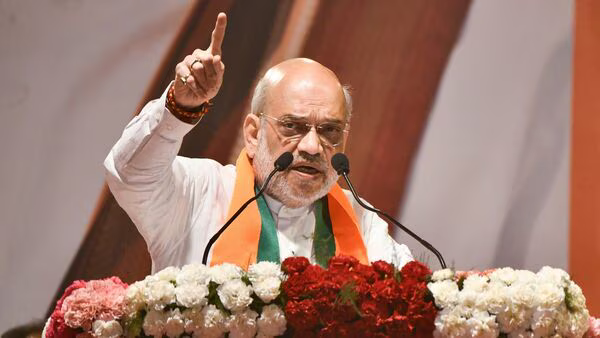
‘310 paar already’ assured PM Modi. HM Shri Amit Shah echoed the same as he urges people to help PM Modi win over 400 Lok Sabha seats and create history.

https://www.livemint.com/elections/310-paar-already-amit-shah-urges-people-to-help-pm-modi-win-over-400-lok-sabha-seats-elections-2024-11716310402303.html

In conclusion, Narendra Modi’s victory in 2024 election is assured based on various factors. His achievements in government, charismatic leadership, economic performance, and foreign policy achievements have all contributed to his popularity and credibility among the electorate. Despite the challenges faced by the opposition, Modi’s popularity and the trust.

As per the sources, the NDA set to create a history with 411 (+/- 3) seats. 

Budget 2024: Impact on sectors and Stocks

With the booming stock market that gave return to investors in 2023, the budget for 2024 has only added the cherry on the pie. The 2024 budget has boosted many sectors such as railways, housing and construction, green energy including solar panels, defence, tourism and microfinance.

Defence: The Indian government has kept its focus on strengthening national security and ensured that the 2024 budget has 11.11 lakh crores allocated to the defence sector.

Companies to watch out for: The major companies likely to see growth are Hindustan Aeronautics Ltd (HAL), Bharat Forge, Bharat Dynamics, Astra Microwave, drone manufacturers, defence suppliers and major defence technologies.

Energy: The government is aggressively promoting solar energy through rooftop photovoltaic panels. In order to reach at least 10 million households with solar systems, the government is aiming to produce up to 300 units of electricity per house per month. This would be a big step towards easing the pressure on traditional coal or oil-based energy. In the long run, this would be beneficial.

Companies to watch out for: Solar energy scheme and its goals can be achieved with help from Borosil Renewable, Tata Power, Waaree Renewable, IREDA, Adani Green, Sterling and Wilson, etc.

Housing: As the government announced a scheme designed for the middle class to purchase or construct homes. With a large middle class population, the housing sector will boom and it will spill positive impact on connected sectors such as banks and finance companies for home loans, construction materials such as cement, steel, home electricals as primaryand electronic appliances, and furniture as secondary beneficiaries.

Companies to watch out for: The major companies likely to benefit from this are LIC, HDFC, NBCC, HUDCO, Ultra Tech, ACC, Polycab, and major electronics.

Microfinance: With aggressive “Atma Nirbhar Bharat”, and other schemes, the government of India is pushing for self-reliance. To support these goals, Micro, Small, Medium Enterprises (MSME) and micro financing are playing a crucialrole in providing large employment opportunities at comparatively lower capital cost than large industries but also help in industrialization of rural & backward areas, thereby, reducing regional imbalances, assuring more equitable distribution of national income and wealth.

Companies to watch out for: Credit Access Gramin, Equitas, Fusion Micro, ESAF Small Bank, Bandhan Bank, Ujjivan Financial Services etc.

Railways: With new business lines such as port connectivity, energy, cement, and mineral corridors and high demand for enhanced infrastructures to support high speed trains, Indian railways will perform better in the next couple of decades.

Companies to watch out: Rail Vikas Nigam, Titagarh, Jupiter Wagon, Texmaco Rail, Siemens, Indian Railway Finance Corporation etc.,

Tourism: The Indian government will push individual state governments to develop tourism within their states. With the rise in income and travel interest among youngsters, state governments will promote religious and traditional tourism. It will need to explore potential as well as existing tourist locations. To support growth in this sector, there will be demand for upgraded infrastructure, connectivity, facilities. The government will work with the private and public sectors to meet demand.

Companies to watch out for: online ticket portals (yatra.com, easemytrip.com), IRCTC, ITC, Indian Hotels, Mahindra Holidays etc.,

These are the main sectors I think we can focus on.

by Sandhya Jane

Disclaimer: Please note that I am NOT a SEBI registered investment advisor. I am passionate about stock market and a voracious reader about stock market investments.

Please do your own research or talk to your investment manager before investing in any companies mentioned in the article.

Achievements of Narendra Modi in 9 Years

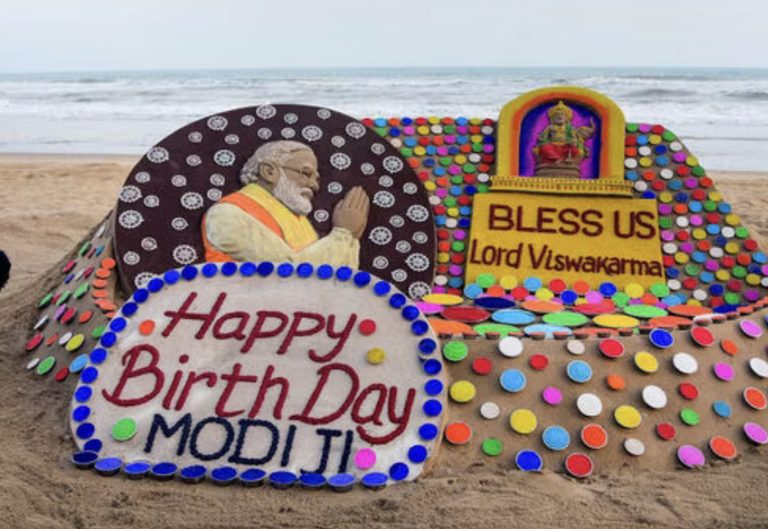
On the birthday of Narendra Modi, the 14th Prime Minister of India, we would like to wish him Happy Birth Day and list few of his achievements to wish him. Modi Ji has made significant achievements during his tenures. From economic reforms to foreign policy initiatives, his leadership has left a lasting impact on the nation. Here are some key achievements of Narendra Modi:
1. Economic Reforms: Under Modi’s leadership, the Indian economy has witnessed several transformative reforms. The introduction of Goods and Services Tax (GST) has simplified the tax structure and enhanced ease of doing business. Other initiatives include the Insolvency and Bankruptcy Code (IBC), which has helped in resolving bad debts and boosting investor confidence.
2. Digital India: Modi’s vision of a digitally empowered India has gained momentum with the Digital India campaign. This initiative aims to provide affordable internet access to all citizens, promote e-governance, and encourage digital literacy. Digital payment systems like Unified Payments Interface (UPI) have revolutionized the way transactions are conducted in the country.
3. Swachh Bharat Abhiyan: Modi launched the Swachh Bharat (Clean India) campaign in 2014 with the goal of making India open defecation-free and creating a clean and hygienic environment. The campaign has resulted in the construction of millions of toilets across the country and has significantly improved sanitation facilities.
4. Make in India: Under the Make in India initiative, Modi seeks to transform India into a global manufacturing hub. This initiative aims to attract foreign investment, promote indigenous manufacturing, and boost job creation. Several sectors, including defense, automobiles, and electronics, have witnessed increased investment and growth.
5. Foreign Policy Initiatives: Modi’s foreign policy has focused on strengthening India’s global standing and promoting bilateral relations. The “Neighborhood First” policy aims to enhance ties with neighboring countries, while initiatives like “Act East” and “Look West” seek to deepen engagement with Southeast Asia and the Middle East, respectively. Modi has also played a crucial role in forging international partnerships, such as the International Solar Alliance.
6. Infrastructure Development: The government under Modi has prioritized infrastructure development across the country. Initiatives like the Bharatmala project, Sagarmala project, and the Pradhan Mantri Awas Yojana have aimed at improving road connectivity, port development, and affordable housing for all.
7. Jan Dhan Yojana: The Pradhan Mantri Jan Dhan Yojana (PMJDY) is a financial inclusion program launched by Modi. It aims to provide banking services to the unbanked population of India. The program has been successful in opening millions of bank accounts and ensuring financial access to the marginalized sections of society.
These achievements highlight Narendra Modi’s commitment to bringing about positive change and transforming India into a stronger and more prosperous nation. His vision and efforts have had a profound impact on various sectors, ultimately shaping the country’s future.
8. IT policy. Modi launched the Digital India programme, which has the goal of ensuring that government services are available electronically, building infrastructure so rural areas get high-speed Internet access, boosting manufacturing of electronic goods in the country, and promoting digital literacy.

Following are some of the policy changes:
– Citizenship Amendment Act (CAA)
– Muslim Women (Protection of Rights on Marriage) Act
– Ram Mandir at Ayodhya
– Higher Education
– Medical Education
– Medical facilities
– Infrastructure
– Digital Revolution
– North East policy
– Jal Jivan Mission
– PM Awas Yojana
– City Gas Distribution Network
– India’s wetland wonder multiply
– Train tracks for improved connectivity
– Railway Electrification
– Startup India
– Make in India
– Metro Rail and public transport transformation
– Food Security
– Successful Middle East Relationship development
– Vaccine Maitri or friendship
– Food basket to needy neighbors
– Support to needy countries
– Successful G20 presidency

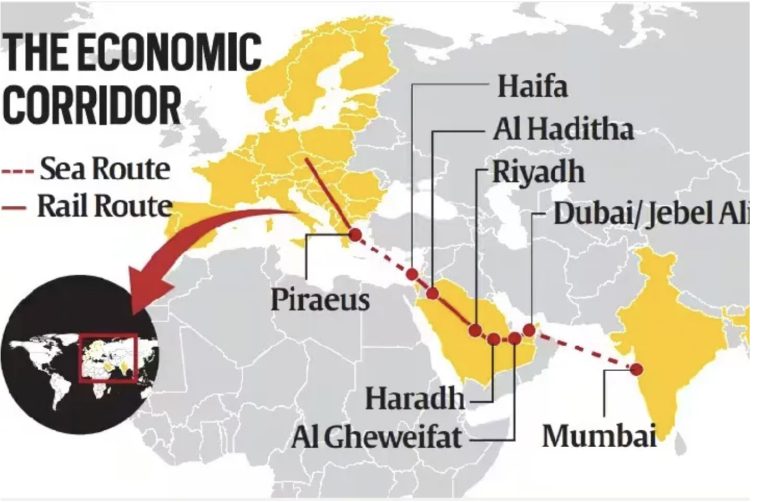
𝐈𝐧𝐝𝐢𝐚-𝐌𝐢𝐝𝐝𝐥𝐞 𝐄𝐚𝐬𝐭-𝐄𝐮𝐫𝐨𝐩𝐞 𝐄𝐜𝐨𝐧𝐨𝐦𝐢𝐜 𝐂𝐨𝐫𝐫𝐢𝐝𝐨𝐫 (𝐈𝐄𝐂𝐂 𝐄𝐂)

𝐈𝐧𝐝𝐢𝐚, 𝐔𝐒, 𝐔𝐀𝐄, 𝐒𝐚𝐮𝐝𝐢 𝐀𝐫𝐚𝐛𝐢𝐚, 𝐅𝐫𝐚𝐧𝐜𝐞, 𝐆𝐞𝐫𝐦𝐚𝐧𝐲, 𝐈𝐭𝐚𝐥𝐲 𝐚𝐧𝐝 𝐭𝐡𝐞 𝐄𝐮𝐫𝐨𝐩𝐞𝐚𝐧 𝐔𝐧𝐢𝐨𝐧 𝐂𝐨𝐦𝐦𝐢𝐬𝐬𝐢𝐨𝐧 𝐡𝐚𝐯𝐞 𝐬𝐢𝐠𝐧𝐞𝐝 𝐚 𝐌𝐞𝐦𝐨𝐫𝐚𝐧𝐝𝐮𝐦 𝐨𝐟 𝐔𝐧𝐝𝐞𝐫𝐬𝐭𝐚𝐧𝐝𝐢𝐧𝐠 𝐭𝐨 𝐞𝐬𝐭𝐚𝐛𝐥𝐢𝐬𝐡 𝐭𝐡𝐞 𝐈𝐧𝐝𝐢𝐚-𝐌𝐢𝐝𝐝𝐥𝐞 𝐄𝐚𝐬𝐭-𝐄𝐮𝐫𝐨𝐩𝐞 𝐄𝐜𝐨𝐧𝐨𝐦𝐢𝐜 𝐂𝐨𝐫𝐫𝐢𝐝𝐨𝐫. 𝐓𝐡𝐢𝐬 𝐰𝐚𝐬 𝐚𝐧𝐧𝐨𝐮𝐧𝐜𝐞𝐝 𝐨𝐧 𝐒𝐚𝐭𝐮𝐫𝐝𝐚𝐲, 𝟖 𝐒𝐞𝐩𝐭𝐞𝐦𝐛𝐞𝐫, 𝐢𝐧 𝐃𝐞𝐥𝐡𝐢.

As a result, there will be enhanced connectivity and economic integration between Asia, West Asia/Middle East, and Europe, which will stimulate economic development. 

As part of the IMCC EC, there will be two different corridors (i) East corridor connecting India to West Asia / Middle East, and (ii) Northern corridor connecting West Asia / Middle East to Europe. The project will include a new rail line that will enhance the transshipment of goods and services between South-East Asia through India to West Asia / Middle East and Europe as a reliable and cost-effective cross-border ship-to-rail transit network. 

The connectivity with the countries of the region remains a key priority for India, which is deeply rooted in the history of Indian civilization. In accordance with the concept “One Earth, One Family, One Future”, India has always committed to investing, cooperating, and building connectivity.

The expansion of connectivity must be accompanied by transparent, consultative, and participatory initiatives. In order to maintain the sovereignty and territorial integrity of all countries, this must be done. It is imperative to adhere to principles of financial responsibility & economic viability to avoid unsustainable debt burdens for recipients.

In addition to providing our industry and business with new opportunities to enter international trade and logistics corridors, development cooperation aims to stand out as a symbol of an alternate approach.

As a result, India stands to gain significantly since it places it firmly on the route of trade flows from South East Asia to the Gulf, West Asia and Europe. In addition to creating huge opportunities in the logistics and transportation industries, this provides us with significant strategic and economic advantages. 

In addition to boosting our trade and exports, it provides us with faster and more affordable transit options. This corridor can be developed as a green corridor. As a result, our green transition objectives will be enhanced, our regional standing strengthened, and our companies will be able to participate equally in infrastructure construction in the region. Along with securing supply chains, creating jobs, and improving trade facilitation, the corridor will also improve accessibility and facilitate trade.

In the areas of connectivity, logistics & freight infrastructure, clean energy & hydrogen production, and energy transmission infrastructure, the MoU will create opportunities for trade and economic cooperation between the parties.This project will improve the logistics and transportation infrastructure. In turn, it will enhance India’s self-reliance by developing significant capacities. Also, this aligns with path-breaking initiatives like Make in India, Sagarmala, and Atmanirbhar Bharat.