الرئيسية بلوق الصفحة 5

Outcome of G20 Summit 2023

The G20 Summit, held in Delhi, India, brought together leaders from the world’s major economies to discuss crucial global issues and collaborate on finding solutions. The summit, which took place over several days, addressed a range of topics with the objective of promoting international economic cooperation and stability. 

Economic Growth For All Resolution in G20:

One of the key outcomes of the G20 Summit was the commitment to fostering sustainable and inclusive economic growth. Leaders recognized the importance of addressing income inequality and promoting job creation, particularly for marginalized groups. They emphasized the need for policies that promote social cohesion and reduce poverty, ensuring that the benefits of economic growth are shared equitably.

Commitment to Climate Change in G20:

Another significant outcome of the summit was the focus on climate change and the commitment to sustainable development. Leaders acknowledged the urgent need to tackle environmental challenges and agreed to work towards a more sustainable future. They reaffirmed their commitment to the Paris Agreement and pledged to take concrete actions to reduce greenhouse gas emissions, promote renewable energy, and protect biodiversity.

Strengthening the Healthcare post Covid-19:

he G20 leaders also discussed the ongoing COVID-19 pandemic and its impact on global health and economies. They recognized the need for international cooperation in addressing the health crisis, including equitable access to vaccines and strengthening healthcare systems. Leaders pledged to support the global vaccination campaign and ensure that no country is left behind in the recovery process.

Digital Transformation to Boost Economy:

In addition, the summit highlighted the importance of digital transformation and innovation in driving economic growth. Leaders recognized the potential of digital technologies to enhance productivity, foster entrepreneurship, and bridge the digital divide. They committed to creating an enabling environment for digital innovation, promoting digital skills, and ensuring the security and privacy of digital systems.

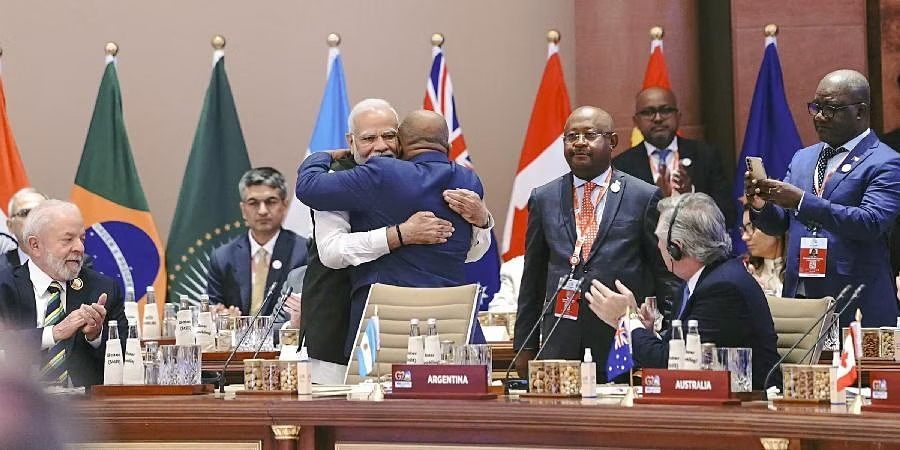
Added African Union as a G20 member

The 55-nation African Union (AU) became a member of the G20 today.  This was a significant move for Bharat, which is trying to project itself as a leader of the Global South.

Geo-Political Issues in G20:

Furthermore, the G20 Summit in Delhi provided an opportunity for leaders to discuss geopolitical tensions and promote peaceful resolution of conflicts. They emphasized the importance of upholding international law, respecting sovereignty, and fostering dialogue to address regional and global challenges.

Overall, the G20 Summit in Delhi yielded significant outcomes in various areas, including sustainable economic growth, climate change, global health, digital transformation, and geopolitical cooperation. The discussions and commitments made during the summit reflected the shared commitment of G20 members to address pressing global issues and work towards a more prosperous and inclusive world.

How to apply new or convert the existing Drivers’ licence in Tokyo?

Japan is popularly known for its advanced lifestyle and for their progressive economy, the country attracts significant chunk of people travelling for tourism or relocation.

In such case, obtaining driver’s licence is one of main process one needs to complete after relocation. One have to either apply for a new Driver’s licence or convert an existing driver’s license in Tokyo. Well, here is a piece of useful information on how Indian citizens with plans to travel abroad can either apply for a new Driver’s License or renew it.  An Indian citizen planning to travel abroad and drive a car or motorbike in a foreign country can obtain an International Driving Licence or International Driving Permit (IDP) from the local RTO office. International Driving License is a translated copy of the original driver’s Licence that is issued by State transport licensing authority in India. In all states of India, International Driving License is issued by the concerned RTO office or Motor Vehicle Department.

With an international driver’s License, an Indian can rent or drive vehicles in foreign lands as Japan and Hong Kong upon their visit in the country. All foreign nationals visiting these countries are also requested to apply for valid International Driver’s License. In this article, we look at the procedure for obtaining an International Driving Licence in India. In order to drive legally in Japan, one must have either an International Driving Permit (IDP) in the Geneva Convention format (no translation needed) or a foreign driver’s license issued by one of the countries under bilateral agreements with Japan (certified translation required) or a Japanese driver’s license. However must switch over to a Japanese driving license.

Herein we present our research about the two types of international driving permits- countries with bilateral driver’s license agreements with Japan, besides how to convert your foreign driver’s license to a Japanese driver’s license. 

When it comes to converting your international driving license, there are two major international road traffic treaties that most countries are signatories of: the Geneva Convention (1949) and the Vienna Convention (1968). Both the international treaties encompass the licensing system, road signs, and ethical provisions for driving a motor vehicle in most countries worldwide. Japan ratified the Geneva Convention treaty in 1964, the year of the Tokyo Olympics, joining more than 100 signatory countries. However, it did not sign the Vienna Convention, which currently has around 70 signatory countries.

These treaties stipulate that IDPs will be mutually recognized with countries under the same treaty. Therefore, only IDPs under the Geneva Convention are valid in Japan. 

The prime difference between the two types is the validity period of the permits. Permits under the Geneva Convention expire a year after the issued date, whereas permits under the Vienna Convention expire in three years from date of issuance.  With a Geneva Convention IDP, you can drive in Japan for up to a year from the date of landing in the country or one year after the issue date of the IDP, whichever is shorter. 

However, when the question comes of using foreign driver’s license in Japan, some countries have entered bilateral agreements to ensure travellers’ and residents’ convenience. These bilateral agreements make domestic licenses valid between partnered countries. Japan has this type of bilateral agreement with 7 countries that have driving license systems that are on par with Japanese standards. Namely, these countries are Switzerland, Germany, France, Belgium, Monaco, Estonia and Taiwan

With a foreign license from a bilateral agreement country, you can drive in Japan for up to a year from the date of landing here or one year after the issue date, whichever is shorter. The only requirement is to carry a certified translation of the license when you drive. 

3-points to check your driving status in Japan 

While driving in Japan one has to keep a check on the following.

  • Your IDP is issued by a country under the Geneva Convention in the format indicated by the said treaty.
  • Or your foreign driving license is issued by Switzerland, Germany, France, Belgium, Monaco, Estonia, or Taiwan.
  • The IDP or foreign driving license does not exceed the period of validity. 
  • You have stayed abroad for more than 3 months prior to entering Japan with your IDP.

Even if your license does not comply with the above points, you can still drive in Japan—so long as you convert your valid foreign driver’s license to a Japanese license through the process- gaimen kirikae, which consists of verifying your documents, plus an aptitude, written, and driving test.

However, certain countries are exempted from taking the written and driving test

During the license conversion process, license holders must take an aptitude, written, and practical driving test. However, the lucky license holders from the following 28 countries and 5 states are exempted from taking the written and driving tests during the license conversion process: 

Australia, Austria, Belgium, Canada, Czech Republic, Denmark, Finland, France, Germany, Greece, Hungary, Iceland, Ireland, Italy, Luxembourg, Monaco, Netherlands, New Zealand, Norway, Poland, Portugal, Slovenia, South Korea, Spain, Sweden, Switzerland, Taiwan, United Kingdom, and the following USA states Hawaii, Maryland, Ohio, Virginia and Washington. 

License holders from all other countries must complete all the steps in the following section. 

Step-by-step how to convert your license to a Japanese driving license

For converting your International Driving Permit process only applies to valid driver’s licenses. One  must be 18 years of age or over, and must be able to prove that is a regular citizen of the country that issued the license for at least 3 months (90 days) in total after obtaining (or receiving) the license. It is mandatory for the applicant to be 16 years of age or older for a standard motorcycle license, 20 years of age or older for a medium-sized license, and 21 years of age or older for a large-sized vehicle.

Below is a step by step outline to convert your foreign driver’s license to a Japanese driver’s license. 

Step 1. Get your license translated into Japanese.

To translate a license into Japanese one can approach respective country’s embassy or consulate in Japan, by the Japan Automobile Federation (JAF), or by other services authorized by the National Police Agency. JAF will translate your document for 3,500 yen (includes stamp fee for mailing license back). This will take approximately 2 weeks to complete. For details from JAF, check here.

Step 2. Submit required documents.

Once an applicant completes step 1, submit the following required documents to the Driver’s License Centre in respective city.

  1. A valid foreign driver’s license.
  2. Japanese translation of the license.
  3. Current and expired Japanese driver’s license(s), if any.
  4. An official copy of your “jumin-hyo” or Certificate of Residence, indicating the “honseki” or registered domicile, or nationality (in case you are a medium-to-long-term resident in Japan under obligation of resident registration).*Photocopies are not accepted. 
  5. Passport* or other form of official ID. 
  6. A document to prove that the address where you are staying is the one you fill in the application form.
  7. A document that proves that you had stayed in the country or region where you obtained the license for a total of three months or more since you obtained it (e.g., passport).*Please bring all of your passports, including expired ones.
  8. Applicant’s photograph for application form (3cm×2.4cm).

Once you submit all the necessary documents, the documents will be verified. Each prefecture’s Driving License Centre will have a different waiting period. 

For example, in Akita, the process of verifying documents can take up to 10 days, after which the centre gets in touch with you to make an appointment for aptitude, written, and driving tests outlined in Steps 3 to 5. 

In Samezu, Tokyo, the document verification is done on the same day as the aptitude and written test. If you pass the written test, you are then allowed to book your driving test. The Samezu location is a popular centre for taking driving tests, so the current wait time (as of the writing of this article) is 4 months between passing the written test and taking the driving test. 

Other tips specifically regarding the Samezu location: 

  • The “writing” test to assess basic understanding of Japanese traffic rules is done on computers.
  • Samezu opens at 8:30 A.M., and there are long queues to get in. Get there early and be one of the first in the queue if you’re short on time.
  • Expect to wait after the initial application until you get interviewed and documents screened.

Basically, even though the order of the steps remains the same throughout Japan, the timeline and waiting process between each step will vary from prefecture to prefecture. Call and confirm. 

Step 3. An aptitude (hearing and eyesight) test.

If the examiners find no fault in the documents and your answers, you will take an aptitude test and then a written test. If you are not confident in your Japanese skills, you may want to have a friend or a colleague accompany you as an interpreter for the whole process. For the eyesight test, you must have 0.7 or better (for both eyes) and 0.3 or better (for each eye).

Step 4. A written test to assess your knowledge of traffic rules.

The written test will check to see if you understand essential traffic rules. The general consensus from past takers of this test: If you don’t study beforehand, you won’t pass on your first try. JAF offers textbooks in many languages available for purchase.

The test itself is multiple-choice (answering either true or false), and you must answer at least 7 out of 10 questions correctly to pass. You can take the test in English, Chinese, Korean, Spanish, Portuguese, and, of course, Japanese. 

Step 5. A practical driving test.

After you have successfully completed the written test, next up is your driving test. 

Steps 2 through 4 can be completed within the same day at certain centres. But some license centres require you to book all appointments in advance or sometimes all tests must be held on different days, depending on the region or prefecture. 

The test is conducted on a predetermined course set up on the premises, and some centres may allow you to practice driving the car before your test. There are some clear dos and don’ts and different techniques to pass the test. For example, exaggerated pointing, looking, and vocalizing to show you are checking all potential dangers. 

According to the inquiries we made, an interpreter is not allowed in the car during the driving test. Therefore, you’ll want to do thorough research on the test itself beforehand. Additionally, based on past experiences shared by expats, consider hiring an instructor for a 2-hour crash course, which will greatly increase your chances of passing.

Step 6. Receive your Japanese driving license.

Certain centers are unable to issue the driver’s license on the same day. Therefore, it is recommended that you call the center in advance to determine when you can pick up your driving license. 

The following are the costs involved in the gaimen kirikae procedure.

  • Obtaining a certificate of residence: 300 yen
  • Issuance of translation: 3,500 yen (when issued by JAF)
  • Driving test fee: 2,550 yen *for standard car
  • Issuance fee: 2,050 yen

If you fail the driving test, you must pay the examination fee of 2,550 yen for every additional try.

Play Dates Ideas For Kids Under 12

However, guidance is very significant for parents to know what suits their wards and where all they can access training under safe hands. 

For kids, “sports” is like a bridge that connects with peers and induces feelings of cooperation, sharing, resilience, goal-oriented actions and making relationships. It also teaches learning to lose with grace and preparing to win again.

Numerous sporting activities would channel kids’ energy, make them focused, open to peers and new friends and social world. Let us consider a slew of sporting activities suited to the sub 12 age group.

Play date Ideas 

kids under12 can join many sporting activities such as Rugby, Tennis, Football, Basketball, Badminton and Squash where an ecosystem of excellent training providers exist. They can groom budding enthusiasts into professional sportsmen of the future. 

According to experts, children between 5–12 years should spend at least 60 minutes on physical activity every day. Although school time has activities, more physical activity means more creativity for the child.

From a scientific point of view also, staying active is vital for cardiovascular fitness, bone health, less obesity, better sleep, coordination and balance.

Sport is the pathway to an active and fulfilling life. Active kids become active adults. That is why encouraging kids to get involved in sports and games is important. Sport teaches life skills and breeds a positive outlook in taking on life’s challenges head-on. 

Sports bring amazing benefits to kids in many ways. Physical fitness is one aspect and the best part is contribution to personality as it creates positive habits that travel into adulthood making them adorable citizens in families and society.

Parents can play the role of mentors and models in encouraging kids to engage in sports. Parents, teachers, and sports coaches double up as models and source of support and inspiration in the minds of kids.

Sports

Gymnastics

To groom your chipmunk into an ace jumping and rolling jack with perfect cartwheels and handstands experience have the guidance of professionals who dodge their injuries at home or playground. 

Classes for kids at Electric Bunny will be useful where little ones crawl through tunnels and roll down slopes. They have door-to-door coaching services and extra fun to play dates.

The Little Gym and Kinetic Sports are great in terms of many options where Little Gym is a bit more innovative with preschool and grade school gymnastics programmes. They also offer music classes. Kinetic Sports has programmes for children with special learning needs. 

Rugby 

Rugby is a popular sport for kids and adults. The majority are run through Rugby Union. 

Rugby is a fantastic sport to develop sportsmanship and teamwork sans any no nose bleeds and injuries. Rugbytots has classes for kids between 2 and 7, who can learn from shapes and colours to imbibe the skills of rugby. 

They can expand skills to their teens at Flying Kukris, where teams are split by age groups and there are exclusive girls’ teams as well. 

Tennis

Although a fun sport, it is excellent for great hand-eye coordination. Tennis coaching for children starts from the age of four and lessons are available at private residences or public facilities with a maximum of four per class. 

Many global cities have Tennis Academy, which runs various programs. For Tennis, guidance from the professional teacher is also good. It offers private lessons and has programmes for kids (4 to 10 years) and teens (11 to 17 years old). 

Competitive tournaments and social events will further bloom the skills. A broader training can come from an elite squad in terms of video analysis, dynamic coaching, functional training and participating in an international tournaments.

Badminton 

Badminton classes for kids are available through private lessons and group lessons. Most cities have Badminton Association, such as Hong Kong Badminton Association (HKBA) with a great legacy offers junior programmes, school programmes and summer camps in badminton. These associations also got training classes, singles competitions, examinations, tournaments, and recreational fun. 

Junior Squash

Squash promotes fun and staying power as a game. The coaching by One Stop Squash has everything to get kids swinging. There are one-on-one lessons and group sessions too. One-Stop Squash has calibrated training plans for beginners to advanced kids. Round Robin matches for existing students will further ensure the competitive edge.

Junior Soccer

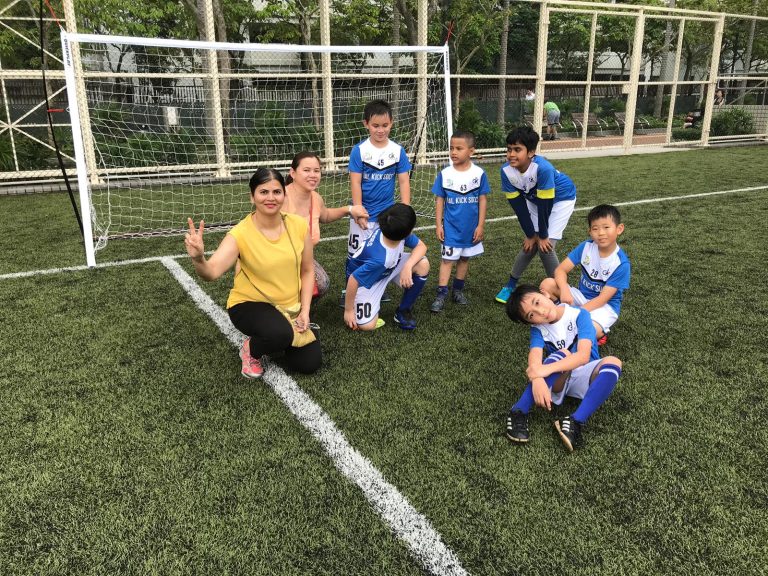
The junior soccer programme is accessible to both members and non-members in many sports clubs. Their programme caters to kids between 5 to 12 with a dedicated Youth Development pathway and an exclusive all-girl team. 

Football

Football is a popular sport among kids and adults.

There is no room to worry about little one getting hurt as junior soccer programmes offer and structured environment for junior footballers to train, play, and make friends. 

Basketball

Basketball with its wonderful throwing, dribbling, jumping and catching has become a wonderful sport moving every muscle and a child can harness the total body coordination and expand its motor skills from a tender age. 

Top academies have the best programmes from individual sessions to elite team building for boys and girls. For small children, Adventure Sports Academy has programmes tailor-made for different age groups. Children can scale up from basic basketball skills to advanced coaching in competitive environments. 

Swimming

Early initiation into swimming is good as they get away with the scare of water and enjoy appearing in tiny trunks and monkey swimsuits.

Harry Wright International is a go-to place where parents can also get into the water and explore thrill with kids.

For a step by step coaching, ESF Shark Swimming takes to different levels and lets children have fun while learning and play with peers. 

Karate / Taekwondo

Martial arts develop strength, focus and concentration. The traditional teachers teach the basic art form in terms of posture and stance, to kids from three to their pre-teens. 

Martial arts like Karate or Taekwondo has many training programmes more than kicking and punching. It covers Basics, Kata and Bunkai with kids put to grading tests before they move to the next colour belt. 

 Hockey

Hockey is a great game with fast-paced swivelling and dangerous tackles. From the age of 8, kids can learn basic skills on how to score a puck at the Hockey Club. 

Professional coaches guide them on various techniques in terms of running, and sweating, with smiles broadening as skills grow. 

Brain Simulating Classes

There are multiple brain simulating classes, which teaches vedic maths, analytical skills, robotics or AI, Coding, data science, life skills, creative writing, debating etc.

Mindfulness

These are special teaching that emphasis on disciplining mind, and creating a focused and organised life, which is essential part of building a successful life. Dinacharya by Beyond Schooling offers one such training that teaches kids to build a disciplined life and chant daily mantras. These teaches extends into spirituality, religious studies, beliefs, moral and ethics, traditions, customs etc.

List of Legal Services offered to NRIs

Legal consulting services are offered in following areas:

  1. Family matters (marriage, divorce etc)
  2. Property matters
  3. Will preparations
  4. Notary and agreements
  5. Legal Documentations
  6. Professional Contracts
  7. Business services (launching business, business registration, trade mark registration, copyright, IP, contracts, deals, documentations etc)
  8. and more

Please note that – If the services are provided through third party, the service provider will be responsible for the entire case.

Please fill up Service Request Form to get the details.

Legal Assistance for NRIs

Hassle-free legal solutions for NRI’s in India.

Legal assistance aid is provided to NRIs who are unable to travel or spend time in legal representation and access/attend to the court system. The purpose of offering these services to NRIs who need legal assistance for themselves or their families in their absence. This way they can remain focused on their professional life and complete the work.

Expert legal guidance.

Our team of legal experts have years of experience in resolving all kinds of legal issues in India. We provide personalized and reliable solutions for NRIs living abroad.

Expert legal guidance.

This legal assistance is offered in most major cities in India. The services will include terms of consulting services, legal advice, finding suitable and reliable lawyer or legal professional, legal documentations etc.

Remote legal services.

You don’t have to travel to India anymore for your legal work. Our remote services ensure that you can get your work done without the hassle of traveling.

Remote legal services.

Timely assistance.

We understand the importance of timely resolutions for legal issues. Our team ensures that all your legal work is done in a timely and efficient manner.

Timely assistance.

International Desi has created a pool of legal professionals such as retired judges, lawyers, counsels, legal assistants etc. These services are offered either by legal professionals from International Desi’s panel or third party legal professionals on a professional basis.

Please fill up Service Request Form to get the details.

If you have any queries, please send us email at – info [at] international-desi [dot] com or hongkong [dot] desi [at] gmail [dot] com

Please remove the unnecessary spaces when you type the email address.