Home Blog Page 3

Marriage and Divorce in Hong Kong

Process and Paperwork Needed to register marriage and file divorce in Hong Kong

Hong Kong’s marriage and divorce laws are governed by the Marriage Ordinance (Chapter 181) and the Matrimonial Causes Ordinance (Chapter 179), respectively. Here are some key points regarding these laws:

Marriage Registration process in Hong Kong

In Hong Kong, marriage can be conducted either by civil ceremony or by religious rites. The minimum age for marriage is 16, but parental consent is required for individuals under 21 years old.

Marriage Registration: Couples must register their marriage with the Hong Kong Marriage Registry within three months of their wedding ceremony.

Here is a step-by-step guide (based on information) to the marriage registration process in Hong Kong.

  • Obtain the Notice of Intended Marriage (Form MR21): The couple must first obtain the Notice of Intended Marriage form (Form MR21) from the Marriage Registration and Records Office (MRRO), which is part of the Immigration Department in Hong Kong. The form can be obtained online or in person at the MRRO.
  • Complete the Notice of Intended Marriage form: Both parties must complete the Notice of Intended Marriage form (Form MR21)

individually. The form requires  personal details such as names,

3.addresses, occupations, and  passport or Hong Kong Identity Card information.

4.Gather supporting documents.  Along with the completed Notice of Intended Marriage form MR21B (name and surname, marital condition (i.e., whether you are a bachelor/spinster; widower/widow; a divorced person; or previously married by any form of marriage), occupation, age, residential address, the full name of your parents, and, in the case of either party being under the age of 21, the name, address, and capacity of the person consenting to the marriage (i.e., the relevant person or persons specified in the Third Schedule to the Marriage Ordinance), the couple needs to gather supporting documents,.

DOCUMENT REQUIREMENT for REGISTERING MARRIAGE IN HONG KONG

Identity proof: originals and photocopies of passports or Hong Kong Identity Cards of both parties

For Foreigners: Passport and entry visa, for foreigners or travellers

Proof of marital status: originals and photocopies of documents proving the termination of any previous marriages, such as divorce certificates or death certificates of former spouses.

Photographs: Recent passport-sized photographs of both parties

Step by Step process of MARRIAGE REGISTRATION IN HONG KONG

  • Submit the Notice of Intended Marriage: The couple needs to submit the completed Notice of Intended Marriage form and supporting documents in person at the MRRO. The processing time for giving Notice of Intended Marriage at the counter in a marriage registry is around 30 minutes. It may take longer for some complicated cases.
  • The office is located at 3/F, Low Block, Queensway Government Offices, 66 Queensway, Hong Kong.
  • Pay the fee: There is a HKD 305, a fee associated with the marriage registration process. The fee can be paid at the MRRO office during the submission of the Notice of Intended Marriage. Payment can be made by cash, EPS, Octopus, FPS, crossed check, or cashier’s order in Hong Kong dollars payable to “The Government of the Hong Kong Special Administrative Region”. Post-dated checks will not be accepted.
  • Choose a marriage registry and appointment: Once the Notice of Intended Marriage is accepted, the couple can choose a marriage registry and schedule an appointment for the marriage ceremony. The marriage ceremony can take place at any of the marriage registries in Hong Kong.
  • Attend the marriage ceremony: On the scheduled date and time, both parties need to appear in person at the chosen marriage registry with two witnesses present. The marriage registry officer will conduct the marriage ceremony, and the couple will exchange vows and sign the marriage register.
  • Obtain the marriage certificate: After the marriage ceremony, the marriage registry officer will issue the marriage certificate. The couple can collect the marriage certificate in person or request that it be mailed to them.
  • Please refer to the official website for

the latest updates, if any.

Divorce in Hong Kong is based on the “irretrievable breakdown” of the marriage. There are several grounds for divorce, including adultery, unreasonable behavior, desertion for at least two years, separation for at least one year with consent, or separation for at least two years without consent.

DIVORCE PROCESS in HONG KONG:

The divorce process in Hong Kong typically involves filing a petition for divorce with the court. If both parties agree to divorce, it can be a relatively straightforward process. However, if there are disputes, the court may need to intervene and make decisions regarding child custody, financial matters, and property division.

It’s important to note that laws can change over time, so it’s advisable to consult updated and official sources or seek professional legal advice for the most accurate and current information on marriage and divorce laws in Hong Kong.

The process of obtaining a divorce in Hong Kong typically involves several steps. Here is a step-by-step guide based on the information available:

Consultation with a Family Lawyer: Before initiating the divorce process, it’s advisable to consult with a family lawyer who specializes in divorce cases. They can provide guidance and advice tailored to your specific situation.

GROUNDS FOR DIVORCE:

In Hong Kong, divorce is based on the “irretrievable breakdown” of the marriage. There are several grounds for divorce:

  • Adultery: One party has committed adultery, and the other party finds it intolerable to live with them.
  • Unreasonable behavior: The other party has behaved in such a way that the petitioner cannot reasonably be expected to live with them.Desertion: The other party has deserted the petitioner for a continuous period of at least two years immediately preceding the divorce petition.
  • Separation: The parties have lived apart for a continuous period of at least one year, and both parties consent to the divorce.
  • Separation without consent: The parties have lived apart for a continuous period of at least two years immediately preceding the divorce petition.
  • Filing the Divorce Petition: Once you have identified the grounds for divorce, your lawyer will help you prepare and file the divorce petition at the Family Court. The petition should include details about the marriage, grounds for divorce, and any claims regarding children, assets, or financial matters.
  • Service of Divorce Petition: The filed divorce petition must be served on the other party (respondent) by an authorized process server or through a solicitor. The respondent then has a specified period to respond to the petition.
  • Response and Ancillary Matters: The respondent can choose to contest the divorce or agree with its terms. If the divorce is contested, the court may hold hearings to resolve disputes related to children, assets, and finances. This stage involves negotiations, mediation, and, if necessary, court proceedings to reach a settlement.
  • Decree Nisi: If the court is satisfied with the grounds for divorce and the settlement of ancillary matters (if applicable), it will grant a Decree Nisi. This is a provisional decree of divorce, indicating that the court intends to grant the divorce unless valid reasons for not doing so are presented.
  • Decree Absolute: After a certain waiting period (usually six weeks), the petitioner can apply for the Decree Absolute, which is the final decree of divorce. Once the Decree Absolute is granted, the marriage is legally dissolved, and both parties are free to remarry.

It’s important to note that the divorce process can vary depending on the complexity of the case and any specific circumstances involved. Consulting with a family lawyer is crucial to understanding the details and requirements specific to your situation. Also, laws can change over time, so it’s advisable to consult updated and official sources or seek professional legal advice for the most accurate and current information on the divorce process in Hong Kong.

USEFUL REFERENCE:

For Registration of Marriage or Filing

Registration Office to file a Notice of Marriage.

The Marriage Registration Office :

3/F, Queensway Government Offices,

Low Block, Hong Kong

(MTR Admiralty Station – Exit C1)

Tel: (852) 2867-2787

Monday-Friday : 8:45 am to 4:45 pm

Saturdays  : 9 am to 11:30 am

Closed on Sundays and General Holidays

General Enquiries

Hotline : (852) 2824 6111

Fax : (852) 2877 7711

Email : enquiry@immd.gov.hk

An appointment booking: (www.gov.hk/marriagebooking) or

by telephone (852) 3102 3883

(You should make the appointment within

14 days before the 3-month period from the date of marriage.)

https://www.lcsd.gov.hk/en/hkch/facilities/otherfacilities/marriageregistry.html

Registration of marriage at immigration https://www.immd.gov.hk/eng/marriage/Registration_of_a_Marriage.html

https://www.immd.gov.hk/eng/marriage/Registration_of_a_Marriage.html#a&lastTab

How to Obtain Power of Attorney (POA) in Indian Consulate or in Indian Embassy?

To acquire a Power of Attorney (PoA) via an Indian Consulate or Embassy, the procedure may differ slightly based on your location, nationality, and the particular requirements of the consulate or embassy you are engaging with. Here is a general step-by-step guide reflecting common practices at Indian diplomatic missions globally, as of February 22, 2025. Since procedures can vary, it is advisable to visit the specific website of the Indian Consulate or Embassy in your region for the latest information.

We have mentioned the step by step guide required in Indian Embassy in Tokyo, Japan and Indian Consulate in Hong Kong.

General Requirements for obtaining Power of Attorney (PoA) through Indian Embassy or Indian consulates.

Identify the Type of Power of Attorney

Decide if you need a General Power of Attorney (providing broad authority for various tasks) or a Specific Power of Attorney (limited to a particular function, such as property transactions). This choice will influence how the document is created and, in some cases, whether it needs to be registered in India later.

Create the Power of Attorney

Draft the PoA on plain paper unless the consulate specifies otherwise. While some consulates accept plain paper, others might require Indian stamp paper (though this is uncommon outside of India, as consulates usually do not provide it).

Clearly include your name, the agent’s name, the powers being granted, along with any terms or conditions. It’s advisable to seek legal assistance to ensure it adheres to Indian law, especially for property or financial issues.

Refrain from signing the document unless the consulate instructs you to do so (some require signatures to be done in their presence).

Collect Necessary Documents

Valid Passport: Provide the original along with photocopies of the first and last pages (for Indian nationals). Ensure your signature on the PoA matches that of your passport.

Proof of Address in your resident country: Include a utility bill, driver’s license, or lease agreement (original or notarized copy if submitting via mail).

Visa/Resident Status: Non-Indian nationals or NRIs may need to submit a copy of their visa, OCI/PIO card, or proof of residency.

Photographs: Typically, two passport-sized photos (usually 35mm x 45mm) are needed to attach to the PoA or application form. Please note that this requirements may vary by consulate.

Witness Information: You may need the names and signatures of two witnesses. Some consulates require witnesses to be present with their ID (e.g., passport or resident card)and sign in front of consular officer. Alternatively, have their (witnesses) signatures notarized by a local notary public if they cannot attend.

Please check with the consulate if they mandate the presence of witnesses for signature.

Miscellaneous Application Form: Download and complete the form from the consulate’s website (e.g., “Miscellaneous Services Form”).

Notarization (If Necessary)

If submitting by mail or if the consulate allows pre-signed documents, have the PoA notarized by a local notary public beforehand. Indian nationals may not require this if signing in person at the consulate, but non-Indian nationals often need it apostilled.

Witnesses who cannot attend must have their signatures notarized separately.

Apostille (For Non-Indian Nationals, If Required)

If you are not an Indian citizen and do not possess an OCI/PIO card, the notarized PoA may require an apostille from your country’s authorities (e.g., office of Secretary of State in the US) before consulate attestation. India is part of the Hague Convention, making apostilles valid, but some Indian authorities still prefer consular attestation.

Indian nationals and OCI/PIO cardholders typically do not need to complete this step.

Submit to the Indian Consulate or Embassy

In Person: Schedule an appointment if necessary (check the consulate’s website). Bring all documents, sign the PoA in front of a consular officer if instructed, and pay the associated fee. Witnesses may need to be present or provide notarized signatures.

By Mail: Send notarized documents, a filled-out application form, photocopies, a prepaid return envelope (trackable, such as USPS Express or FedEx), and payment (usually via cashier’s check or money order, not cash or personal checks).

Fees: 

Fees generally range from USD 10 to 20 per attestation, with an additional, but confirm with your consulate for specifics.

Processing and Collection

Processing typically takes about 5 to 10 working days, depending on the consulate and submission method. In-person submissions may allow for same-day pickup in certain cases.

Collect the attested PoA in person, or receive it by mail. You will return with the original document featuring the consulate’s attestation stamp/seal.

Forward to India and Register (If Necessary)

Send the attested PoA to your agent in India. For property-related matters, it must be registered at the local Sub-Registrar’s office in India within a specific timeframe (often three months) to ensure legal enforceability.

    Additional Notes

    • Consulate-Specific Rules: Some consulates (e.g., San Francisco, New York, or London or Hong Kong or Tokyo or Sydney etc.) have unique forms or procedures. For example, the Consulate in Chicago requires registration on the eSewa portal beforehand.
    • Presence Requirement: Many consulates insist the applicant signs in their presence to verify identity, especially for Indian nationals.
    • Mental Capacity: PoAs from mentally incapacitated individuals are not accepted unless accompanied by notarized guardianship orders.
    • Contact: Check the consulate’s website or email their consular section for clarification.

    How to Obtain Power of Attorney (PoA) in Indian Embassy in Tokyo, Japan

    To obtain a Power of Attorney (PoA) through the Embassy of India in Tokyo, Japan, you’ll need to follow the consular service procedures outlined by the embassy. Below is a step-by-step guide based on standard practices for Indian embassies as of February 22, 2025. For the most accurate and up-to-date information, always refer to the official website of the Embassy of India, Tokyo (https://www.indembassy-tokyo.gov.in/) or contact them directly, as specific requirements or fees may vary.

    Step-by-Step Guide

    1. Draft the Power of Attorney
      • Prepare the PoA document on plain paper unless otherwise specified by the embassy. It should include:
        • Your full name, address, and passport details (as the principal).
        • The agent’s full name, address, and identification details (the attorney).
        • A clear description of the powers granted (e.g., general or specific, such as for property transactions in India).
        • Date and place of execution (Tokyo).
      • Do not sign the document yet, as the embassy typically requires you to sign in the presence of a consular officer.
      • Consulting a legal expert familiar with Indian law is recommended, especially for complex matters like property or financial transactions.
    2. Gather Required Documents
      • Valid Passport: Original and a photocopy of the first and last pages (showing your signature and personal details). Your signature on the PoA must match your passport signature.
      • Proof of Address in Japan: A Japanese residence card (Zairyu Card), utility bill, or similar document (original and photocopy).
      • Photographs: One or two recent passport-sized photos (usually 35mm x 45mm) to affix to the PoA or application form (check embassy requirements).
      • Witness Details: Two witnesses are often required. They must either:
        • Accompany you to the embassy with their IDs (e.g., passport or Zairyu Card) and sign in front of the consular officer, or
        • Have their signatures notarized by a Japanese notary public if they cannot attend.
      • Miscellaneous Application Form: Download this from the embassy’s website under “Consular Services” and fill it out.
    3. Visit the Embassy (In-Person Submission)
      • Location: Embassy of India, 2-2-11 Kudan-Minami, Chiyoda-ku, Tokyo 102-0074, Japan.
      • Timing: Consular services are typically available Monday to Friday, 9:00 AM–11:30 AM for submissions and 4:00 PM–5:00 PM for collections (confirm on the website, as holidays may affect this).
      • No Appointment Needed (Usually): Unlike some consulates, the Tokyo Embassy often accepts walk-ins for PoA services during submission hours, but it’s wise to check the website or call (+81-3-3262-2391) to confirm.
      • Bring all documents. You’ll sign the PoA in front of a consular officer, who will verify your identity. Witnesses may need to be present unless their signatures are pre-notarized.
    4. Fee Payment
      • The fee for PoA attestation is typically JPY 2,390 (approximately USD 15–20), which includes the attestation fee (JPY 2,050) and an Indian Community Welfare Fund (ICWF) surcharge (JPY 340). Confirm the exact amount on the embassy’s website.
      • Payment is usually accepted in cash (Japanese Yen) at the counter. Credit cards or other methods may not be available, so bring exact change if possible.
    5. Attestation Process
      • The consular officer will attest the PoA by adding an official stamp and signature, making it legally valid for use in India.
      • Processing is often same-day if submitted in the morning. You can collect the attested document between 4:00 PM and 5:00 PM on the same day, barring any issues with your paperwork.
    6. Submission by Mail (Optional)
      • If you cannot visit in person:
        • Get the PoA and witness signatures notarized by a Japanese notary public first.
        • Include all required documents, the completed Miscellaneous Application Form, a photocopy of the PoA, and a self-addressed, prepaid return envelope (e.g., Japan Post with tracking).
        • Send payment via postal money order (available at Japan Post offices) made payable to “Embassy of India, Tokyo.”
        • Mail to: Consular Section, Embassy of India, 2-2-11 Kudan-Minami, Chiyoda-ku, Tokyo 102-0074, Japan.
        • Processing may take 5–10 working days due to mailing time.
    7. Use in India
      • Send the attested PoA to your agent in India. For property-related matters, it must be registered at the local Sub-Registrar’s office in India within a specified period (often 3 months) to be legally enforceable.

    Additional Notes

    • Contact: Email cons1.tokyo@mea.gov.in or call +81-3-3262-2391 for queries. The embassy’s emergency helpline (+81-80-3930-1715) is for urgent cases only.
    • Notarization/Apostille: Indian nationals and OCI/PIO cardholders don’t need an apostille; embassy attestation suffices. Non-Indian nationals may need the PoA notarized and apostilled by Japanese authorities (e.g., Ministry of Foreign Affairs, Japan) before embassy attestation.
    • Website Check: Visit https://www.indembassy-tokyo.gov.in/ and navigate to “Consular Services” > “Attestation” or “Power of Attorney” for the latest forms, fees, and instructions.

    Step-by-Step Guide to obtain Power Attorney in Hong Kong

    To acquire a Power of Attorney (PoA) in Hong Kong through the Consulate General of India, you must adhere to a specific procedure set by the consulate. The Consulate General of India in Hong Kong manages these services under its Miscellaneous Consular Services category. Here’s a comprehensive guide based on standard practices as of February 22, 2025. For the latest information, it’s essential to visit the official website of the Consulate General of India in Hong Kong ((https://www.cgihk.gov.in/) or reach out to them directly, as requirements and fees may vary.

    1. Duly filled Application Form
    2. Original and photocopy of Power of Attorney/ Will/ Probate to be attested. The PoA/Will/Probate should be typed on plain A4 size paper as per requirement of applicant.
    3. Photocopy of Hong Kong/Macau ID, valid visa and passport of the executant
    4. Original Hong Kong/Macau ID, valid visa and passport of the executant to be shown
    5. Two recent and clear, coloured photos
    6. Executant and witnesse(s), if any, have to sign the PoA/ Will/ Probate in presence of Consulate staff.
    7. Photocopy of Hong Kong/Macau ID, valid visa & passport of witness(s), if any, and originals to be shown
    8. Fee of HKD 172
    Note: (i)For attestation of Power of Attorney (PoA)/ Will/ Probate, executant and witness(es), if any, have to be present in person along with photocopy and original of their passport and HK/Macau ID. If witnesses are not signatories, their presence is not required.
    (ii) For attestation of PoA/ Will/ Probate of Foreign passport holders, PoA/ Will/ Probate must be first notarized by a notary public in Hong Kong /Macau before submitting to Consulate for attestation. A recent & clear coloured photograph affixed on the PoA/ Will/ Probate also must have chop of Notary. A second photograph (same as on the original PoA/ Will/ Probate) is to be pasted on the photocopy of the notarized PoA/ Will/ Probate.
    (iii) Please carefully read General Instructions before applying for the service.

     General Instructions:

    1. The applicant should be a resident of the consular jurisdiction of CGI, Hong Kong i.e. Hong Kong and Macau SARs.
    2. All original documents are to be shown for verification and need not to be submitted.
    3. Documents, which are issued in India, submitted for attestation (marriage/birth/death/educational certificate/ driving license etc) must be first apostilled by MEA as per the details at https://www.mea.gov.in/apostille.htm.
    4. Documents, which are issued in Hong Kong/Macau, submitted for attestation-
      1. Birth/marriage/death/divorce must be first apostilled by respective High Court.
      2. Other documents must be first attested by Notary Public in Hong Kong/Macau.
    5. Documents, which are issued in foreign countries (other than India/Hong Kong/Macau) must be first authenticated by Indian mission in that country or mission of that country in Hong Kong/Macau.
    6. The delivery of processed documents is to be done preferably to the applicant or to the person authorized by the applicant on presentation of-
      1. Authorization letter
      2. Official payment receipt given to applicant at the time of submission of application, and
      3. Copy of Hong Kong/Macau ID of authorized person and original to be shown.
    7. The normal duration for grant of above services (except service at 1C i.e. attestation of company/trade documents and 1D i.e. issuance of PCC) is two working days (for services of which application is received at Consulate) and three working days (for services of which application is received through our external application center).
    8. Applicant can opt for express service (except service at 1C i.e. attestation of company/trade documents and 1D i.e. issuance of PCC); same day (for services of which application is received at Consulate) and one working day (for services of which application is received through our external application center), on payment of an additional fee of HKD 200. However, the same is subject to application being complete and all documents being in order.
    9. As address proof, following documents (not older than 3 months) shall be submitted.
      1. Utility bill (water or gas or electricity or phone or internet)
      2. Bank statement
      3. Credit card bill
      4. Tax papers of HK/Macau
      5. Lease Agreement
    10. Company Documents must be first attested by Notary Public in Hong Kong/Macau.

    (Source: Indian Consulate in Hong Kong)

    Visa and Immigration Updates for non Resident Indians (NRIs) in USA

    As reported by US Visa Bulletin March 2025, Indian applicants as the green card wait time shortens by six weeks in key employment-based categories, offering some relief in the long immigration queues. This is indeed a good news for Indians working and living in USA on work permit.

    News eagerly anticipated by many, has brought a mix of hope and challenges for Indian nationals residing in the United States. The bulletin outlines the priority dates and the availability of green card numbers, which are crucial for those waiting to adjust their status and secure permanent residency.

    This month, the bulletin reveals slight advancements in the EB-2 and EB-3 categories for Indian nationals, offering some encouragement to those who have been in the queue for years. However, the demand continues to outpace the supply, highlighting the ongoing backlog and the need for legislative reforms to address this issue more effectively.

    Many Indian professionals in the tech industry, healthcare, and academia have been closely monitoring these updates, as they impact career planning and family life. Community groups and immigration advocates continue to call for changes that would expedite the process and reduce the wait times that have become a significant burden for many families.

    Overall, the March 2025 Visa Bulletin serves as a reminder of the complexities of the immigration system and the resilience of those navigating it, hoping for a brighter future in the United States.

    Sustainable Materials for Home Decor

    There’s a strong push towards furniture made from eco-friendly materials like reclaimed wood, bamboo, cork, and recycled plastics. Vegan leather alternatives are also gaining traction.

    These trends showcase a broader movement towards sustainability, personalization, and technology integration, all while maintaining a focus on beauty and comfort in home environments.As we look to the future of interior design, these trends reflect not just a shift in aesthetic preferences but a deeper evolution in how we perceive our living spaces. The emphasis on sustainability speaks to a growing awareness and responsibility towards our environment, encouraging choices that are both stylish and environmentally conscious.

    Personalization is becoming key, as individuals seek furniture and decor that resonate with their personal stories and lifestyles. This is exemplified in the demand for artisan and handcrafted pieces, which offer a unique touch and a sense of authenticity.

    Technology’s role in our homes is expanding, seamlessly blending into the fabric of our daily lives through smart furniture that enhances convenience and functionality without compromising style.

    Furthermore, the resurgence of retro elements infused with modern sensibilities offers a nostalgic nod to the past while keeping an eye on contemporary innovation.

    All these elements come together to create spaces that are not only visually appealing but also thoughtful and intentional, reflecting a balance between practicality and aesthetics. As we continue to adapt our homes to meet the changing needs of the world, these trends offer a glimpse into the future of living spaces that are dynamic, adaptable, and deeply connected to personal and global narratives.

    How New Income Tax, 2025 Bill will impact on non resident Indians(NRI) and Overseas Citizens of India(OCI)?

    Resident (of India) Definition:

    An individual will be classified as a Non-Resident for the previous year if they do not meet both of the following criteria:

    • If they stay in India for 120 days instead of the usual 182 days.
    • Alternatively, if they spend 60 days or more in India during the previous year and a total of 365 days or more in the four years leading up to that previous year.

    Taxes for non-resident Indians in India:

    According to the new regulation, a non-resident Indian who resides in India for more than 120 days and earns 15 lakhs from Indian sources (excluding foreign income) will be required to pay taxes similar to those of a resident Indian, provided they are not subject to tax in any other country.

    Additionally, for Indian citizens and persons of Indian origin visiting India within the year, the 60-day period mentioned above will be replaced with 182 days. A similar provision applies to Indian citizens who leave India in any previous year as crew members or for employment purposes abroad.

    Taxes on Global Income for non-resident Indians:

    As per NRI Taxation Under New Regulations, non-resident Indians (NRIs) will be subject to taxation. If you qualify as a “resident but not ordinary resident” (RNOR), your income—whether active or passive—earned outside of India may be taxable. This includes interest from bank accounts, dividends from foreign stocks, and capital gains from the sale of overseas assets.

    New Rules for Liberalized Remittance Scheme

    • Indian residents remitting more than 7 lakhs abroad may face the potential higher taxes on the source income.
    • Remittances for education and medical treatment will undergo scrutiny and require detailed documentation.

    Mandatory disclosures for non-resident Indians:

    All non-resident Indians, including OCI cardholders (NRIs and OCI card holders), are required to disclose their assets located outside of India. This encompasses various holdings such as bank accounts, stocks, cryptocurrencies, real estate, and other assets. Along with reporting their investments and bank accounts, non-resident Indians must also declare the taxes they have filed, including any tax refunds and rebates, in their country (or countries) of residence. Stricter regulations will apply for the declaration of “Double Tax Avoidance Agreement (DTAA).” The Income Tax department may request more documentations.

    • Assets including bank accounts and deposits, stocks (located outside India), cryptocurrency, real estate, and other forms of assets.
    • Capital gains from mutual funds, ETFs, REITs, and similar investments.
    • Foreign pensions and retirement accounts, such as 401(k) in the USA, Japan’s iDeCo pension system, the UK workplace pension, Mandatory Provident Fund in Hong Kong, EPF in the UAE, and Superannuation in Australia, etc. along with their withdrawal details.

    Please be aware that Indian authorities will actively monitor and investigate your foreign assets and income, if applicable.

    Penalty for hiding or incomplete disclosures:

    Not disclosing these assets or failing to report complete or correct documents could result in penalties, which may additional include criminal prosecution.

    • A tax of up to 300% may be imposed on those assets, along with the risk of criminal prosecution.
    • Individuals found guilty could face charges under anti-money laundering legislation.
    • There is a potential for income to be seized if it exceeds 50 lakh and is located outside of India.

    How to disclose your income and assets?

    Income Tax Department (It can be accessed after logging on to Income Tax e-Filing portal)

     Go to e-filing portal > login > AIS

    Details provided in the form:

    • Tax Deducted / Collected at Source
    • SFT Information
    • Payment of taxes
    • Demand / Refund

    Other information (like Pending/Completed proceedings, GST Information, Information received from foreign government etc)

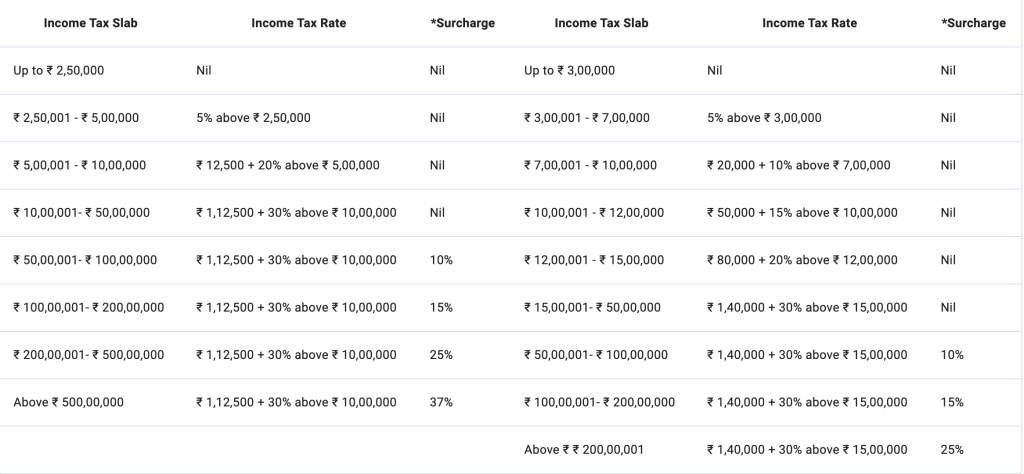
    Tax rates for Non Resident Individual as per new Income Tax Rule 2025:

    (Source: Income Tax Department Official Website)

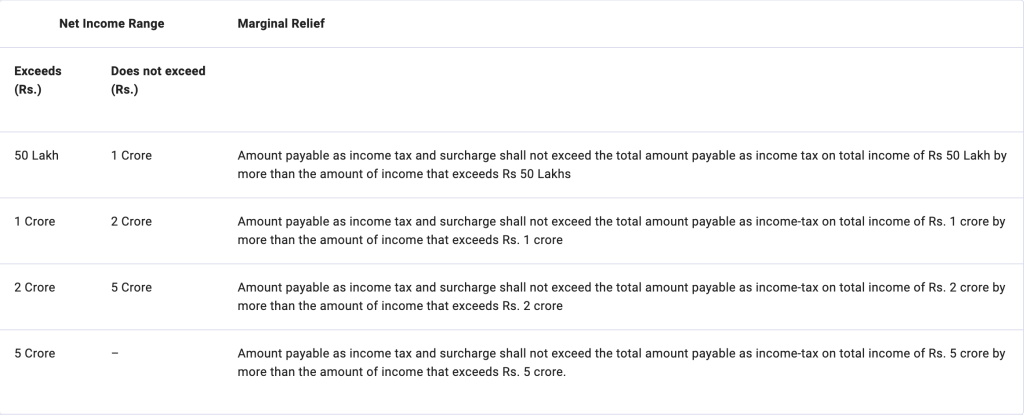
    Marginal relief can be claimed from surcharge if the amount of income earned exceeding ₹ 50 lakhs, ₹ 1 crore, ₹ 2 crore or ₹ 5 crores respectively as under:

    ITR 2 

    This return is applicable for Individual (whether Resident or Non-Resident) and Hindu Undivided Family (HUF).

    ITR3

    This return is applicable for Individual (whether Resident or Non-Resident) and Hindu Undivided Family (HUF).

    Taxes for Foreign Business Owners

    Foreign companies serving Indian clients will be required to pay taxes on their profits. According to the new Significant Economic Presence (SEP) Rule, any business, regardless of whether it has a physical office in India, may be subject to taxation if it provides services to Indian clients. This applies to multinational firms, including IT companies, consultants, e-commerce platforms, and those in the service industry that sell their products or services in the Indian market.

    Please consult your chartered accountant in India or visit Income Tax Official website for more details.

    Fully Funded Summer Programs in Europe in 2025

    Summer Internship in Europe for 2025

    A list of the best fully funded summer programs in Europe is available for international students in 2025, youth, and young leaders. Options include internships, training programs, and summer schools. Both current students and recent graduates may apply.

    Experience Europe’s vibrant culture and create lasting memories by applying to these exciting opportunities. The list of programs is provided below.

    1. Bulgaria INSAIT Graduate Fellowship 2025

    Host Country: Bulgaria

    Location: INSAIT Institute, Sofia (Institute for Computer Science, Artificial Intelligence)

    Dates: To be determined between the Student and Mentor

    Duration: 8 to 12 Weeks

    Financial Benefits: Fully Funded

    Link: Bulgaria INSAIT Graduate Fellowship

    2. World Leaders Convention 2025 in Spain 

    Host Country: Spain

    Location: Madrid

    Hosted by: Organization for Global Policy & Dialogue (OGPD)

    Program Dates: June 27 to June 30, 2025

    Duration: 4 Days

    Benefits: Fully Funded

    Application Deadline: April 15, 2025

    Link: World Leaders Convention 2025 in Spain

    3. Youth Action Summit 2025 in Italy (50 Fully Funded Seats)

    The Forum will gather approximately 250 applicants from different countries, providing three levels of support: 50 Fully Funded, 100 Partially Funded, and 100 General Access.

    Location: Milan

    Forum Dates: May 1 to May 4, 2025

    Hosted by: Centre for Diplomatic Advancement (CDA)

    Benefits: Fully Funded

    Application Deadline: February 20, 2025

    Link: Youth Action Summit 2025

    3. Youth Action Summit 2025 in Italy (50 Fully Funded Seats)

    The Forum will gather approximately 250 applicants from different countries, providing three levels of support: 50 Fully Funded, 100 Partially Funded, and 100 General Access.

    Location: Milan

    Forum Dates: May 1 to May 4, 2025

    Hosted by: Centre for Diplomatic Advancement (CDA)

    Benefits: Fully Funded

    Application Deadline: February 20, 2025

    Link: Youth Action Summit 2025

    4. United Nations Law Fellowship 2025 in the Netherlands

    Host Country: Netherlands

    Location: The Hague

    Fellowship Venue: The Hague Academy of International Law

    Duration: 3 Weeks

    Fellowship Dates: June 30 to August 1, 2025

    Application Deadline: February 26, 2025

    Link: United Nations International LAW Fellowship

    5. ITU UNU MERIT Summer School 2025 in the Netherlands

    Host Country: Netherlands

    Location: Maastricht

    Summer School Dates: June 23 to June 27, 2025

    Duration: 5 Days

    Benefits: Partially Funded

    Application Deadline: March 15, 2025

    Link: ITU UNU MERIT Summer School

    6. INSAIT Summer Fellowship 2025 in Bulgaria 

    Host Country: Bulgaria

    Location: INSAIT Institute, Sofia

    Dates: To be determined between the Student and Mentor

    Duration: 8 to 12 Weeks

    Financial Benefits: Fully Funded

    Application Deadline: March 3, 2025

    Link: INSAIT Summer Research Fellowship

    7. 12th Heidelberg Laureate Forum (HLF) 2025 in Germany

    Host Country: Germany

    Duration: 8 Days

    Forum Dates: September 13 to September 20, 2025

    Number of Applicants: 200

    Financial Benefits: Fully Funded

    Application Deadline: February 11, 2025

    Link: 12th Heidelberg Laureate Forum (HLF)

    8. ETH Robotics Summer Fellowship 2025 in Switzerland 

    Host Country: Switzerland

    Location: Zurich

    University: ETH Zurich University

    Duration: Two Months

    Dates: June 30 to August 29, 2025

    Benefits: Fully Funded

    Application Deadline: February 28, 2025

    Link: ETH Robotics Summer Fellowship

    9. 13th TULIP Summer School 2025 in France 

    Host Country: France

    Location: Germ, France

    Dates: June 21 to June 27, 2025

    Duration: 7 Days

    Benefits: Fully Funded

    Number of Participants: 25

    Application Deadline: March 7, 2025

    Link: 13th TULIP Summer School

    10. Germany HZDR Summer Student Program 2025

    The HZDR Summer Program 2025 is a 9-week initiative running from July to September 2025.

    Host Country: Germany

    Location: HZDR Research Center, Dresden

    Program Dates: July 30 to August 29, 2025

    Eligibility: Open to All Foreign Nationalities

    Application Deadline: February 23, 2025

    Link: Germany HZDR Summer Student Program

    11. Einstein Fellowship Program 2026 in Germany 

    Host Country: Germany

    Program Location: Einstein Summer House

    Duration: Six Months

    Financial Benefits: Fully Funded

    Application Deadline: May 15, 2025

    Link: Einstein Fellowship Program

    12. Ruhr Summer Program 2025 in Germany 

    Host Country: Germany

    Location: Research Academy Ruhr

    Program Dates: June 22 to July 5, 2025

    Duration: 2 Weeks

    Benefits: Fully Funded

    Application Deadline: February 16, 2025

    Link: Research Explorer Ruhr Summer Program

    13. UNESCO World Heritage Residence Scholarship 2025 in Sweden 

    Host Country: Sweden

    Duration: 4 Weeks

    Benefits: Fully Funded

    Application Deadline: February 16, 2025

    Link: UNESCO World Heritage Residence Scholarship

    14. Spain CNIO Summer Training Program 2025 

    Host Country: Spain

    Location: Spanish National Cancer Research Centre, Madrid

    Duration: 8 Weeks

    Dates: August 23 to August 14, 2025

    Benefits: Fully Funded

    Application Deadline: March 31, 2025

    Link: Spain CNIO Summer Training Program

    Please note that this list will be edited to add more programs and remove whose deadlines are over.

    How to Plan Japan Trip for Sakura (Cherry Blossom)?

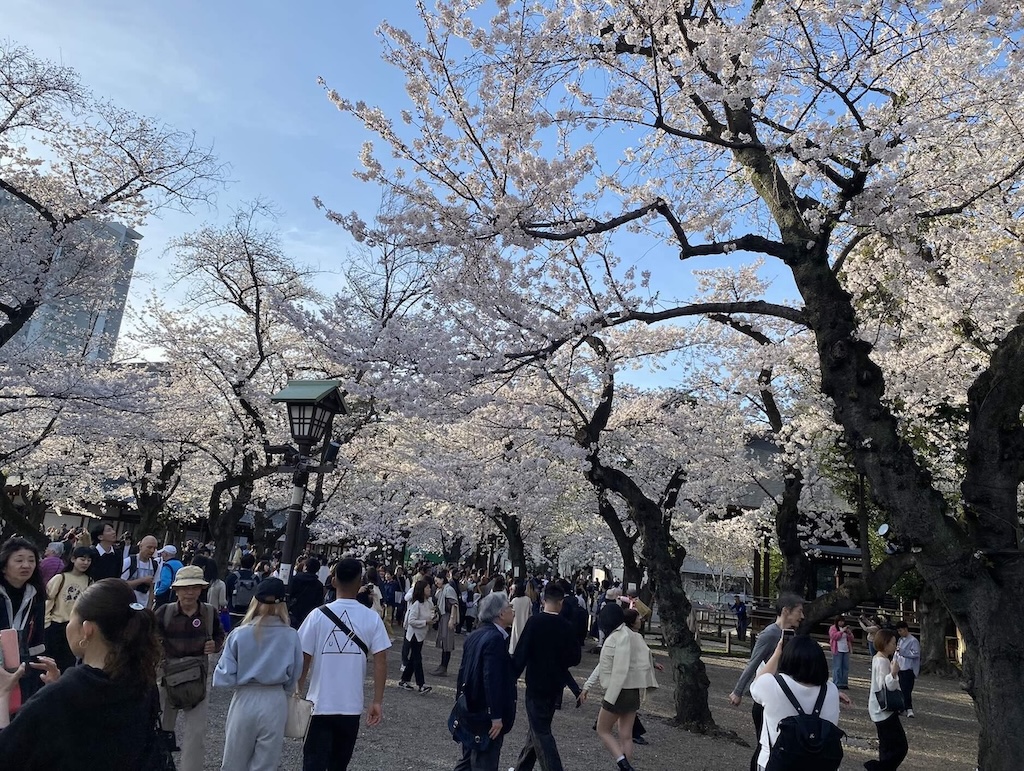
    Japan is renowned for its beautiful Sakura, or Cherry Blossoms. The Sakura season typically runs from mid-March to mid-April, varying by location within Japan. In Tokyo, it usually peaks at the end of March. To assist tourists in planning their visit and fully enjoying the unforgettable experience of Cherry Blossoms, it’s essential to check the official website where the Japanese government publishes tentative dates for Sakura in each city. If you’re considering a trip to Japan to witness the Sakura, it’s advisable to start your planning in November or December of the previous year, as flights and accommodations tend to become quite expensive as the dates approach.

    Following are the most important information you need to pay attention to:

    Plan Your Travel Dates: To make the most of your trip, schedule your travel around the cherry blossom forecast dates. Keep a close eye on the website, as these dates may change due to weather fluctuations. It’s advisable to visit the Japanese weather department’s site for the cherry blossom predictions, which are generally released in late January or early February. Here’s the link to the official website of the Japanese weather department.

    The peak cherry bloom typically lasts for 8 to 10 days, so it’s crucial to plan your visit during this time to experience the iconic Sakura, as it is a dream come true for many to see it in person.

    1. Prepare Itinerary:

    This is needed for applying visa if you need one. Please click here to check if you are eligible for visa on arrival or need visa before travel to Japan.

    2. Destinations to Visit

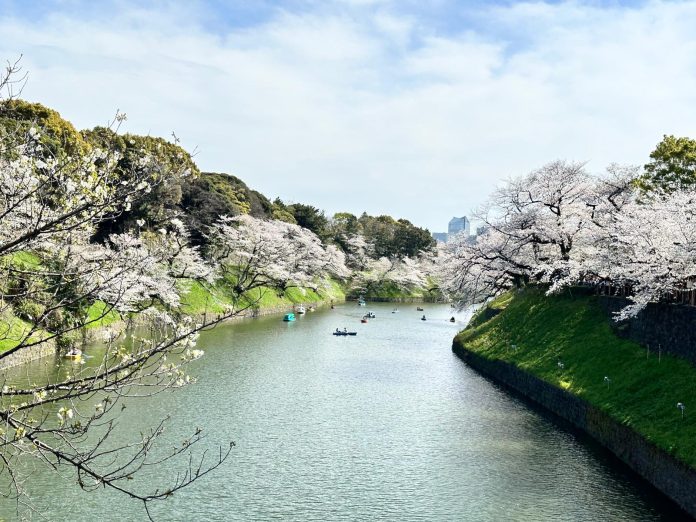
    • Tokyo: Ueno Park, Shinjuku Gyoen, Chidorigafuchi, and Yoyogi Park are top spots.
    • Kyoto: Maruyama Park, the Philosopher’s Path, and Kiyomizu-dera are stunning.
    • Osaka: Osaka Castle Park, Kema Sakuranomiya Park, and the Osaka Mint Bureau (for its famous sakura path).
    • Hiroshima: Hiroshima Peace Memorial Park and Shukkeien Garden.
    • Hokkaido: The best places in Hokkaido for sakura viewing include Maruyama Park in Sapporo and Goryokaku Park in Hakodate.
    • Other spots: Consider visiting NaraKamakura, or even rural regions like the Fuji Five Lakes area for a quieter experience.

    3. Prepare your travel documents:

    Once your dates are decided, you must plan your documents including Japanese visa. The list of documents needed for applying visa are as below:

    • a. Valid Passport
    • b. Visa application form, (invitation form (if invited by family and friends),
    • c. 1 Photo
    • d. Flight itinerary with the flight/ship number and date of arrival and departure to and from Japan
      • e. One of the following documents to prove ability to pay travel expenses during your stay in Japan
      • f. Income certificate or tax return issued by a public agency
    • g. Bank statement, balance certificate etc.
    • h. Itinerary in Japan form
    • i. Additional documents as necessary

    To prepare above documents or forms, please follow the guidelines mentioned by Japanese Government. To apply for the Japanese visa, please visit Japanese Government at the official link.

    4. Book Flight to Japan

    This is the most crucial aspect of your tour once your travel plans are set. Please make sure to book your tickets as soon as possible to avoid rising prices, especially during peak season when airlines aim to maximize their profits. Additionally, consider exploring flexible travel dates or nearby airports to potentially find better deals. It’s also wise to sign up for fare alerts from airlines or travel websites, so you can be notified of any sudden price drops or special promotions. By staying informed and proactive, you can ensure a smoother and more budget-friendly travel experience.

    5. Book Hotel in Japan

    Book your hotel as early as possible once your tickets are confirmed. The cherry blossom season is a busy period for tourism in Japan, so it’s wise to book your accommodations early. Hotels in popular cities such as Tokyo and Kyoto tend to fill up fast. Consider staying at ryokan (traditional inns) or guesthouses for a more authentic experience. Look for hanami parties: Certain parks, such as Ueno, have specific areas set aside for picnicking during hanami (flower viewing), and nearby lodging can quickly become fully booked.

    Here’s a list of budget hotels in Tokyo, Osaka, Nagoya, and Kawaguchiko within the price range of ¥7,000–¥12,000 per night (based on availability and season):

    CityHotel (features)Approx PriceLocation
    TokyoMystays Asakusa
    (Free Wi-Fi, kitchenette in rooms)
    Approx. ¥8,000–¥10,000Asakusa, near Tokyo Skytree and Sensoji Temple
    APA Hotel Shinjuku-Kabukicho Tower (Public bath, free Wi-Fi)Approx. ¥9,000–¥11,000Central Shinjuku, close to nightlife and shopping areas
    Sakura Hotel Ikebukuro (Multilingual staff, simple yet comfortable rooms)Approx. ¥7,500–¥10,000Near Ikebukuro Station, good for exploring Tokyo
    Tokyo Ueno Youth Hostel (Features: Shared kitchen, basic private and dormitory rooms)Approx. ¥7,000–¥8,500Ueno area, near Ueno Park and museums
    Capsule Hotel Anshin Oyado Akihabara (Capsule-style beds, spa and sauna facilities)Approx. ¥8,000Akihabara, great for tech and anime fans
    KyotoWise Owl Hostels Kyoto
    Opens in new window
    (Popular)
    Approx. ¥ 9000Walkable distance from few tourist attractions
    R Star Hostel Kyoto (Popular)Approx. ¥8,500–¥9,500Subway/metro & Train Access
    Seiki Kyoto Station
    Opens in new window
    Approx. ¥9,500walkable distance from downtown
    Hotel Excellence Enmachi Ekimae (popular)Approx. ¥9,000–¥12,0002 min walk from Enmachi Station
    OsakaHotel Sun Plaza 2 Annex (Shared and private rooms)Approx. ¥7,000–¥8,500Shin-Imamiya, convenient access to Namba
    APA Hotel Namba-Ekihigashi (Modern amenities, free Wi-Fi)Approx. ¥9,000–¥12,000Near Dotonbori, easy access to shopping and dining
    Osaka Guesthouse Nest (Affordable dormitory and private rooms)Approx. ¥7,000–¥8,500Close to Tennoji Station
    Hotel Chuo Selene (Spacious rooms, coin laundry)Approx. ¥8,000–¥9,500Shin-Imamiya, close to Tsutenkaku Tower
    Kamon Hotel Namba (Stylish, compact rooms)Approx. ¥9,000–¥10,500Namba, walking distance to Dotonbori
    Kawaguchiko (Mt Fuji San)Dot Hostel & Bar Lake Kawaguchiko (Modern shared and private rooms)Approx. ¥7,500–¥8,500Close to Lake Kawaguchiko
    K’s House Mt. Fuji (Guesthouse with cozy private rooms)Approx. ¥8,000–¥10,000Walking distance to Kawaguchiko Station
    Plaza Inn Kawaguchiko (Basic but clean and affordable)Approx. ¥9,000–¥10,000Near Kawaguchiko Station
    Hostel Michikusa-ya (Traditional Japanese-style rooms)Approx. ¥8,000–¥9,000A short walk to the lake
    Rakuyu Ryokan (Hot spring baths, traditional ambiance)Approx. ¥11,000–¥12,000Overlooking Lake Kawaguchiko

    Note: Prices can fluctuate based on the season, ongoing promotions, and the booking platforms used. To secure the best rates, early reservations are highly recommended!

    You can explore other types or star hotels on any of the major hotel bookings sites such as:

    Booking.com

    Expedia.com

    Agoda.com

    Rakuten Travel in Japan

    and, many more.

    6. Book your local tours

    Local tours offer the best opportunity to discover Japan through various group types. With their expertise and professionalism, they meticulously plan these tours to provide tourists with the most enriching experiences. Here are some of the top local tours available which offer various packages depending on your needs:

    All Japan Tours: For Private and Group Tours

    Small Tours

    Viator Japan tours

    Exclusive Tours

    Get Your Guide

    Please note that we have experience with Viator only and you need to research these tour operators before confirming your bookings.

    7. Research on tourist attractions in Japan

    This is a particularly busy season, so it’s wise to plan your itinerary to make the most of your tour in Japan. If tickets can be purchased online, be sure to book them ahead of time to skip long lines. Additionally, look for the least crowded times during these peak tourist days to enhance your sightseeing experience.

    8. Sakura Viewing (Hanami)

    • Sakura Picnics: Gather with locals for hanami by bringing along a blanket and delicious food such as sushi, bento boxes, or sakura-flavored treats. Sakura-inspired sweets like mochi and beverages infused with cherry blossom flavors are especially popular.
    • Sakura Night Viewing: Many parks illuminate their sakura trees after dark, known as yozakura. This enchanting experience offers a unique atmosphere, distinct from daytime blossom viewings.
    • Participate in Sakura Festivals: During the cherry blossom season, various cities hold flower festivals featuring food stalls, live performances, and cultural activities.

    9. Transformations in Japan

    JR Pass: If you’re planning on traveling between cities, the Japan Rail Pass (JR Pass) can save you money on trains, including the bullet trains (shinkansen). Just make sure it aligns with your travel schedule.

    Local transport: Japan’s metro and public transport are super convenient. In cities like Tokyo and Kyoto, get a transportation pass or prepaid card (like Suica or Pasmo).

    Renting a bike: In cities like Kyoto, cycling is a popular and efficient way to explore cherry blossom sites.

    Renting a car: It one of the best options if you are traveling with family.

    10. Research on Food and Drink during Sakura Season

    • Sakura-flavored treats: From sakura mochi (sweet rice cakes) to sakura-flavored lattes or beers, it’s a fun time to try unique seasonal flavors.
    • Matcha: Kyoto is especially famous for matcha-flavored desserts and drinks, so don’t miss that!
    • Japanese Meal: Try out elaborate Sushi, Bento, Udon Noodles, Shashmi Noodles and more.
    • Vegan Meal: Japanese Vegan meal are served in many restaurants and temples. Those are delicious and elaborate sit down meals. Must try these vegan 8-10 course meal at temple in Kyoto.

    12. Research on Local Shopping in Japan

    1. Ginza (For Fashion and Luxury)

    Discount coupon combined with tax exemption (Lotte Duty Free Ginza)

    Discount coupon combined with tax exemption (Japan Duty Free Ginza)

    In Ginza, GN1-GN5 shopping center under highway is very popular for mid priced fashion, food, and more This is one of the best locations where you get all under one roof and also enjoy various cuisines while shopping.

    2. Kappabashi (For Stylish Kitchenware)

    3. Asakusa (For Perfect Japanese Souvenirs)

    4. Jimbocho (For Winter Jackets, Ski Shops & Sport, Books)

    5. Akihabara (For Manga, Electronics & More)

    6. Ochanomizu (For Guitars & Instruments)

    7. Harajuku (For Young Fashion)

    8. Shimokitazawa (For Vintage Clothing and Antiques)

    9. Makuhari (For Modern Malls and Great Discounts)

    10. Odaiba (For Shopping and Entertainment, with a View)

    13. Be Ready for Japan

    • Expect crowds: Sakura season is extremely popular, especially in major cities. Try to visit less well-known parks if you’re looking for a more peaceful experience. Arrive early at the popular spots, getting there early in the morning will help you avoid the biggest crowds.
    • Expect lots of Walking: If you’re not accustomed to walking, it’s essential to train for 2-3 months prior to your trip to Japan. During your travels, be ready to walk 5-10 kilometers daily.
    • Prepare for Limited English: We encourage you to learn a few essential phrases, like “thank you,” “excuse me,” and “sorry.” Feel free to use Google Translate to communicate with local Japanese residents; you’ll find it easy to navigate your surroundings.
    • Information Desks: Most train stations have assistants available to help you with train schedules or to guide you to your destination. Tokyo’s main station features an information desk where you can receive the assistance you need.

    Please note: To keep this article relevant, it will be updated on a regular basis whenever new information is available or old information becomes obsolete.

    India’s Budget 2025: Its Relevance to Non-Resident Indians (NRIs)

    The India Budget 2025 will likely feature measures that strengthen ties between India and its global diaspora. The India Budget 2025 is anticipated to focus on the concerns and aspirations of Non-Resident Indians (NRIs) or Global Indians. This is because of their significant contributions to India’s economy, remittances, and foreign investments. While the specifics will be disclosed upon the budget’s announcement, here are some potential features and measures that may be relevant for NRIs:

    Taxation on Global Income for NRIs

    Clarifying Global Tax Obligations:

    The government clarifies NRIs’ tax responsibilities regarding their global income. Currently, NRIs are taxed only on income generated in India. However, the updates may be made on how global income is managed, including potential changes to tax residency rules.

    Streamlined Tax Residency Certificate (TRC):

    The budget could simplify the TRC process, making it easier for NRIs to claim tax benefits under Double Taxation Avoidance Agreements (DTAA) with other countries.

    Tax Exemptions on Remittances:

    There may be further initiatives to exempt or reduce taxes on remittances sent to India by NRIs, particularly for family support and investments. This could encourage a greater influx of funds into the country.

    Incentives for NRI Investments

    Government Schemes:

    More incentives could be offered for NRIs to invest in government-backed schemes such as Sovereign Gold Bonds (SGBs), Public Provident Fund (PPF), or National Pension Scheme (NPS). While these schemes are currently open to NRIs, reforms may be introduced to enhance returns or facilitate investments.

    Simplified Access to Indian Markets:

    The government might announce measures to ease the process of investing in Indian stock markets, mutual funds, and real estate, potentially including simpler fund repatriation and more tax-efficient options.

    Foreign Direct Investment (FDI):

    NRIs, as Indian citizens living abroad, can typically invest in FDI and Indian startups. The budget may further encourage NRI investment in emerging sectors like startups, renewable energy, and technology.

    Special NRI Bonds:

    To stimulate investment in infrastructure and government-backed initiatives, the government could introduce special NRI bonds or financial instruments with attractive yields.

    NRI Housing & Property Ownership

    Relaxed Real Estate Regulations:

    The budget may propose more lenient rules for NRIs wishing to purchase property in India, including reduced stamp duties and more accessible financing options.

    Affordable Housing Investments:

    NRIs might be incentivized to invest in India’s affordable housing sector, with tax breaks or exemptions for urban renewal, affordable housing, or rural development projects.

    Capital Gains Tax Exemptions:

    To encourage real estate investments, NRIs could benefit from capital gains tax exemptions when reinvesting proceeds from property sales into new properties in India.

    Special NRI-Focused Tax Regimes

    NRI-Specific Tax Schemes:

    The introduction of more favorable tax schemes for NRIs could be on the table, offering reduced rates for long-term investments or income from specific asset types (e.g., stocks, mutual funds).

    Return of India-Specific Exemptions:

    The budget may propose special tax exemptions for NRIs bringing wealth back to India for long-term investment or savings.

    Pension and Social Security Benefits

    Pension Repatriation:

    The government may tackle concerns regarding pension repatriation. It would help in easing the access and transfer of pension or retirement benefits for NRIs without significant tax burdens, possibly linking the NPS with international financial institutions.

    Social Security Agreements:

    The budget could focus on expanding and updating agreements with countries where many NRIs reside, ensuring that social security contributions (like pensions or healthcare benefits) can be easily transferred or credited.

    Education & Skill Development

    Investment Incentives in Education:

    The Indian government might introduce schemes encouraging NRIs to contribute to India’s education sector through scholarships or establishing educational institutions, possibly offering tax breaks for those creating educational endowments or sponsoring Indian students abroad.

    Support for Indian Institutes of Excellence:

    The government could provide NRI-friendly avenues for donations to leading Indian universities or research institutions, particularly those emphasizing technology, science, and innovation.

    Facilitating Repatriation of Funds

    Simplifying Repatriation Rules:

    The Indian government may work to ease the repatriation process for NRIs, including fewer restrictions and quicker processing times for funds transferred from India.

    Repatriation Taxation:

    Proposals could include simplifying tax policies and eliminating withholding tax on repatriated income to further facilitate fund movement from India to the NRI’s country of residence.

    Increased Focus on NRI-Related Digital Services

    E-Governance Initiatives:

    As the digital economy expands, the government may introduce initiatives for NRIs to easily access government services from abroad, such as visa applications, tax management, or online access to land records and property details.

    Enhanced Digital Banking:

    New schemes could be proposed to improve NRIs’ access to digital banking services, streamlining the process of maintaining Indian bank accounts, transferring funds, and tracking investments.

    Legal Reforms for NRIs

    Strengthening NRI Legal Rights:

    Measures may be introduced to enhance legal protections for NRIs, ensuring better handling of property disputes, family matters, and inheritance laws, with a more streamlined process for resolving legal issues.

    Simplified Succession Planning:

    The government might also propose measures to simplify will creation and property succession for NRIs, ensuring their assets in India can be smoothly passed on to family members.

    Promoting Philanthropy

    Incentives for Charitable Contributions: Encouraging NRIs to engage in philanthropy within India could be prioritized, potentially offering tax exemptions or incentives for donations to social causes, healthcare, and education.

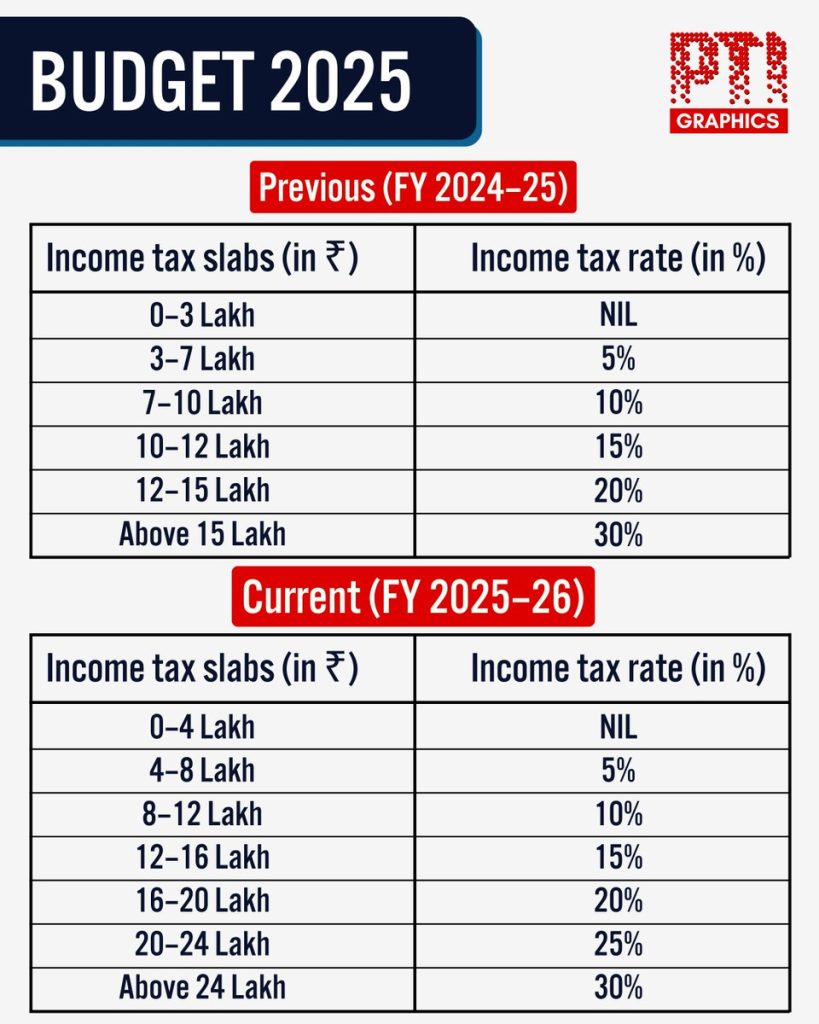
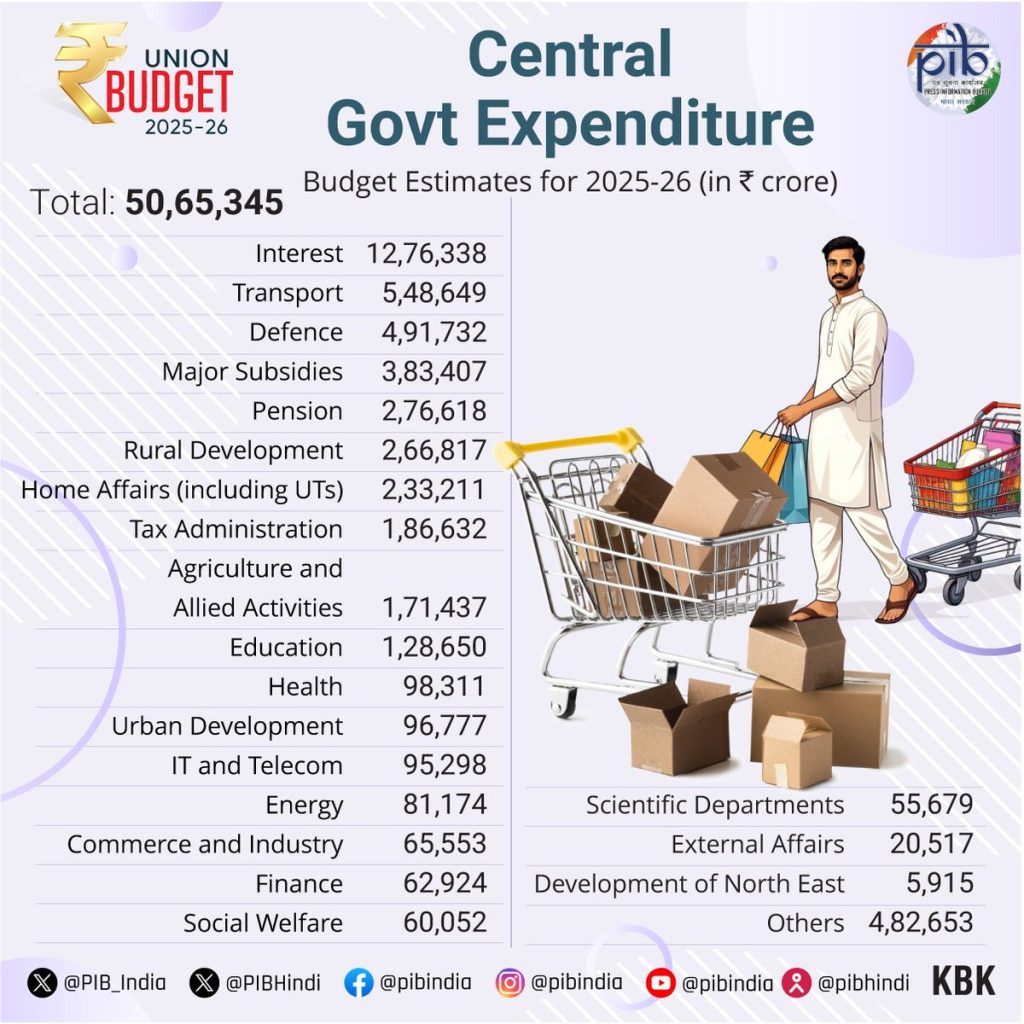
    Summary of India’s Budget 2025 in two pictures.

    Disclaimer: As of February 2025, the India Budget 2025 has yet to be presented. The features I’ve highlighted are derived from current trends and priorities observed in previous budgets, along with predicted policy directions for the Indian economy. The Indian government’s longstanding emphasis on enhancing investment, simplifying tax regulations, supporting the NRI diaspora, and modernizing financial systems greatly shapes our expectations for future budgets.

    Once the official budget is unveiled, we can reference these points directly from the budget speech and related documents issued by the Ministry of Finance of India.

    To keep abreast of these developments, the following resources will be especially useful:

    Ministry of Finance (Government of India): The official website offers all pertinent documents concerning the annual Union Budget, including speeches, economic surveys, and in-depth analyses. After the budget is presented, you can find the document here: https://www.finmin.nic.in/

    Power Bank Might Have Ignited the Blaze in Aircraft

    Photo: Yonhap via AFP

    An Airbus aircraft operated by South Korean airline Air Busan ignited on Tuesday at Gimhae International Airport in the southern region of the country while getting ready for its flight to Hong Kong, according to fire officials. Local news sources indicated that the fire on Air Busan Flight 391, which erupted around 10:15 PM, might have been triggered by a portable battery stored in an overhead compartment.

    Investigations are ongoing to determine the cause of the fire that affected the Air Busan aircraft at Gimhae International Airport in the southern region of the country on Tuesday. However, local media reports indicate that a power bank stored in an overhead locker may have ignited the blaze.

    Initially, authorities reported that three individuals were injured, but this number was later revised to seven on Wednesday. According to the country’s transport ministry, one person remains hospitalized. A total of 169 passengers, along with seven flight attendants and staff members, were evacuated from the Airbus A321 using inflatable slides.

    After this incident, airline passengers are advised to check that their power banks are in good condition and from trusted brands before boarding flights, as experts have issued this warning following a suspected fire caused by a charging device on an aircraft preparing to depart from South Korea to Hong Kong.

    How big is Mahakumbh 2025?

    When we read about Mahakumbh, we do not have an idea of its magnanimity. Let’s examine some key data:

    1. Religious and Ritual Importance:

    Auspicious Dates: The timing of the Kumbh Mela is determined by astrological alignments. The most important day for the bath is called the Mauni Amavasya, which sees the largest crowd.

    Purification: Taking a dip in the holy rivers is believed to purify the soul and wash away sins. People travel from all over the world to participate in this act of religious significance.

    2. Billion-dollar Economy: 

    The event generates massive economic activity, including tourism, local businesses, and hospitality.

    3. Crowd: 

    An estimated 400-500 million people will be accommodated by a single city during the #Mahakumbh, surpassing the official population of the United States and exceeding that of many nations.

    This figure accounts for approximately one-third of India’s total population.

    4. Area: 

    The event is held in a massive area near the confluence of the Ganga, Yamuna, and the Saraswati rivers, spread across over 2,000 hectares (5,000 acres).

    The authorities build a temporary city to accommodate the crowds, including over 20,000 tents, roads, and even railway stations to manage the flow of devotees.

    5. Public Services: 

    Essential services such as lodging, boarding, food, and sanitation are provided.

    – The largest logistical operation globally for providing food, water, and related services to a massive crowd are implemented. Consider the coordination of raw materials, cooking, serving, cleaning, and waste disposal.

    – If you’ve ever felt overwhelmed organizing catering for 1,000 wedding guests, just imagine the scale of this operation.

    6. Infrastructure: 

    A vast infrastructure is supply of electricity, mobile networks, and more.

    – The largest traffic management operation in world history is in place to manage the flow of buses, railways, air travel, private vehicles, and foot traffic (including visitors, support staff, and service personnel).

    7. Security: 

    Thousands of police personnel, along with drone surveillance, and a huge number of volunteers ensure safety. There are controlled entry and exit points, and emergency response teams are on standby. Extensive safety and security measures will address fire hazards, medical emergencies, traffic control, and other security concerns.

    8. Public Health: 

    The health management system is crucial. Temporary medical facilities are set up, and thousands of medical professionals provide assistance. There are also special arrangements for sanitation, including mobile toilets and water purification stations.

    – Additionally, there may be disruptions due to the movements of VIPs, dignitaries, prominent spiritual leaders, and media influencers.

    – Remarkably, most of these services were offered at discounted rates or even free of charge.

    9. Sadhus and Spiritual Leaders:

    The Naga Sadhus, the most revered ascetics, take part in the main procession and are a major draw for the crowd. They usually travel to the site in large processions, offering a spectacle for the devotees.

    Spiritual leaders, swamis, and various guru organizations also establish their camps in the area to lead prayers, provide spiritual guidance, and distribute food to the masses.

    10. Significance: 

    The Kumbh Mela is not just a religious gathering but a Hindu cultural/relgious celebration, with music, dance, spiritual discourse, and other cultural activities happening in the makeshift city.

    The organization of such an event, balancing spiritual practices with the needs of millions of people, is a monumental task that requires years of preparation and meticulous planning.

    Indian businesses are actively participating in various ways to support this monumental event in world history. This could be a mother of all case studies in management school in terms of strategy, planning, execution and more.

    A total of 1,500 individuals have embarked on a deep spiritual journey by performing their own Pind Daan while living, letting go of worldly attachments to become honored Naga Sanyasis. Additionally, 19 women have taken the sacred step of initiation into the Naga Sanyasi order, signifying their entry into this esteemed ascetic tradition. Upholding the cherished Guru-Shishya parampara, they will undergo initiation, representing their full dedication to the path of devotion and renunciation.